


Introduction
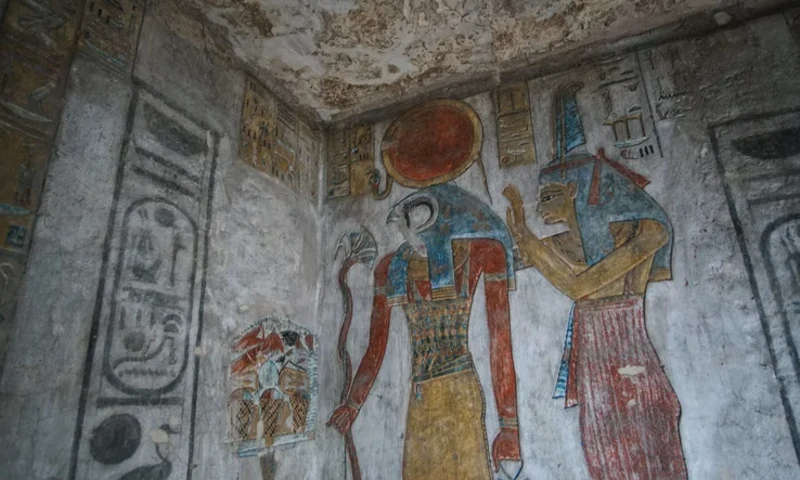
Step inside an Egyptian temple and discover the Egyptian gods carved into the columns and painted on the ceilings and walls. See a falcon-headed figure and know that it’s Horus, a crocodile-shaped statue and recognize it as Sobek, and a woman wearing a throne headdress identified as Isis.
This guide introduces the major gods, then explores the temples and museums where you can see them. For inspiration on how to include Cairo, Luxor, and Aswan in a multi-country tour, browse our Egypt travel packages.
Table of content:
Who Are the Ancient Egyptian Gods?
At hundreds of Egyptian temples, the same gods and goddesses appear in reliefs and paintings. Travelers asking who are the ancient Egyptian gods often want a brief list of the deities they’re likely to see at temples, and the names below represent the gods who feature most often in Egyptian mythology.
Sun, Sky, and Creation
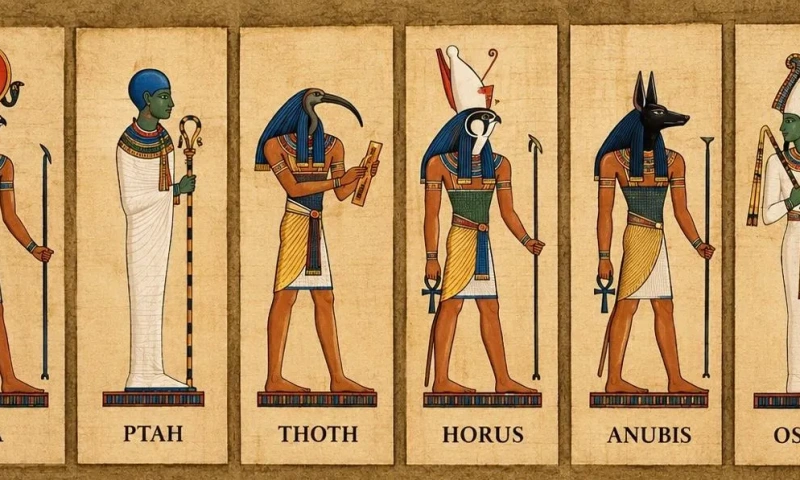
Amun was the patron god of Thebes, but he merged with the sun god Ra, becoming Amun-Ra. Horus, shown with a falcon’s head or as a man with a falcon perched on his shoulder, was a sky god and the symbol of kingship.
Ptah, the creator god, was worshiped at Memphis as the patron of craftsmen.
Death, Magic, and Writing
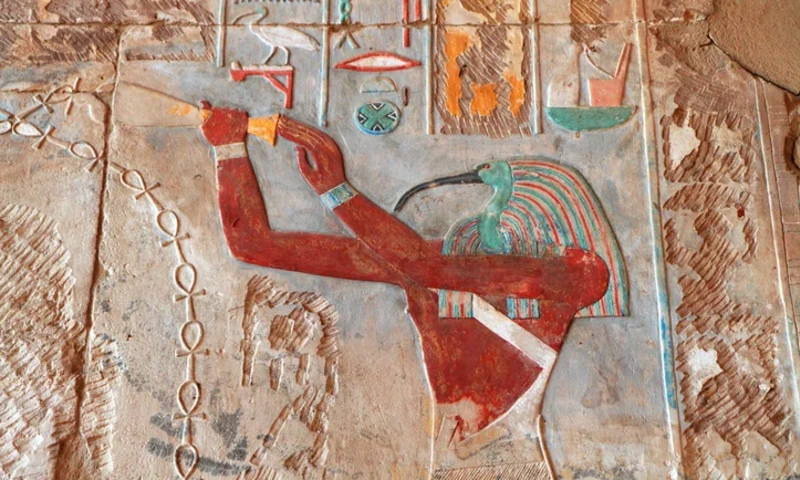
Osiris was the god of the underworld; his wife Isis was the protector and magic-user who raised their son Horus; and Anubis, with the head of a jackal, was the god of embalming and the underworld. Thoth, depicted as an ibis or baboon, was the god of writing and wisdom.
Hathor, sometimes shown with cow ears or horns, was the goddess of music, love, and motherhood.
Ready to see the Egyptian gods in the places where they were worshipped? Pair your temple visits with other destinations through our multi-country tours, or send our travel experts a message to start building your route.
What Do the Animal Heads of Egyptian Deities Mean?
Animals in ancient Egyptian art always symbolized a quality the animals were thought to embody. Artists used the association to create a visual shorthand so that when the traveler sees a falcon-headed god, they can recognize him as Horus, and the jackal-headed Anubis as the god of embalming.
The crocodile head on Sobek’s statue represents the strength of the river’s most feared predator, and the cow horns, which frame Hathor’s sun disk, make the connection to her nurturing powers.
For the modern traveler, the associations help make sense of what they see at the sites. Even if the visitor cannot read the hieroglyphs that identify the scenes, the heads give helpful context. Then the names carved above the figures create a connection to Egyptian mythology.
Which Gods Are Celebrated in Luxor’s Temples and Tombs?
Luxor’s temples and tombs are among the most important in Egypt. They include the colossal temple complex of Karnak, the East Bank of Luxor’s capital, and the Valley of Queens, where royal families built tombs. This section includes the Valley of the Queens for families traveling with children.
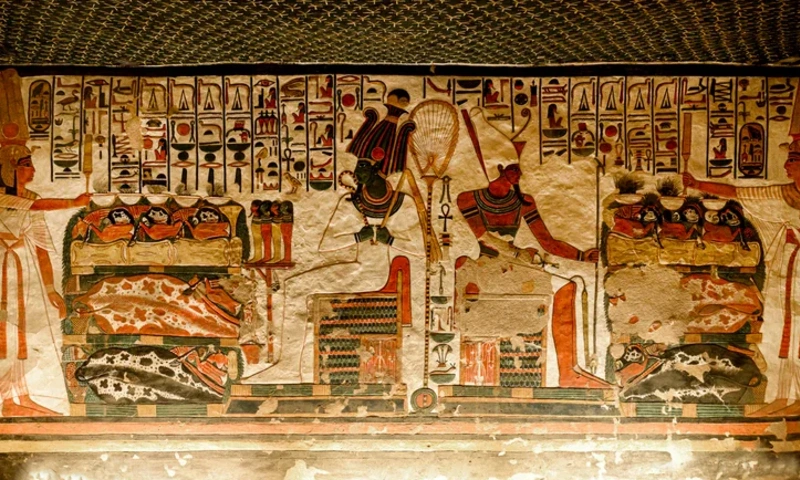
The Valley of the Queens includes the tombs of queens and royal children. The most famous is the tomb of Nefertari, wife of Ramses II, which has vivid wall reliefs showing the queen in the company of gods of death.
For a closer look at statues and royal mummies, the Luxor Museum on the Nile Corniche is also worth a visit.
Where Can You See Sobek and Horus at Temples and Monuments?
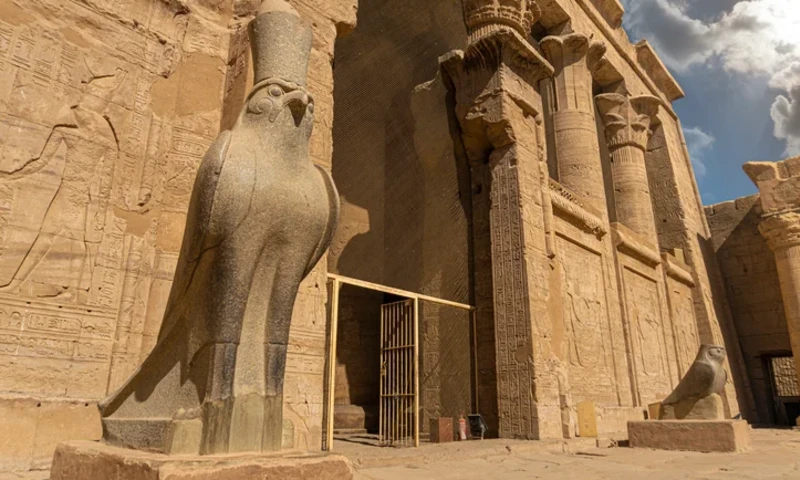
Kom Ombo Temple, north of Aswan, is unique because it was dedicated to two gods: Sobek the crocodile and Horus the falcon. Ancient Egyptian temples to Sobek had crocodile heads, but this one takes the imagery further, with carvings of the animals in reliefs. Horus, depicted as a man with the head of a falcon or perched beside his shoulder, was the sky god and the symbol of kingship.
North of Luxor, the Temple of Horus at Edfu is one of the best-preserved in Egypt. The carvings and reliefs inside follow the storyline from start to finish, and the pylon gate is one of the largest in Egypt.
Which Gods Are Honored at the Temples in Philae, Dendera, and Abydos?
The best-preserved reliefs in Philae Temple, a short motorboat ride from Aswan, depict the goddess Isis. The temple was dismantled and reassembled on Agilkia Island, where it is now protected from the rising waters of Lake Nasser.
The Temple of Hathor at Dendera, farther north on the Nile, has some of the best-preserved painted reliefs in Egypt. The Temple of Seti I at Abydos has remarkable friezes and is often included in a private car tour of both sites.
Edfu and Kom Ombo temples are on the route of most Nile river cruises, and Philae is also a popular stop. A guide can narrate the story as the tourist gazes up at the reliefs. On your own, learning to recognize the gods is as simple as looking for the headdresses, animal heads, and the hieroglyphs that identify each.
FAQs
Who are the ancient Egyptian gods that visitors see most often?
Amun, Ra, Isis, Osiris, Horus, Hathor, Anubis, Thoth, and Sobek appear most often on temple and tomb walls. All have distinctive headdresses or animal heads, making it easy for the traveler to recognize the gods and goddesses. Your guide can point them out as you tour the temples.
How can I recognize a god in a temple relief?
Look first at the head and the headdress: Horus has a falcon’s head, Anubis has a jackal’s head, and Hathor’s cow horns surround a sun disk. The hieroglyphs alongside the figures identify the god or goddess.
Which temple is dedicated to two gods?
Kom Ombo Temple north of Aswan honors two gods, Sobek the crocodile and Horus the falcon. The design of the building assigns part of the temple to each god, and the reliefs on the walls illustrate their myths.
Where can I see crocodile mummies in Egypt?
The Crocodile Museum near Kom Ombo Temple displays mummified crocodiles. The museum and the nearby Sobek Temple make a pair, as the animals were sacred to the crocodile god.
