


Introduction
Mention the Library of Alexandria, and people nod like they know the story. Most don't, not really. What they know is the myth: a great library, burned, lost forever. The actual history is older and stranger than that and, honestly, more interesting. It started in the third century BC, a Ptolemaic project that outgrew its own ambitions within a few generations. Scholars came from well outside Egypt to work there. Scientists and writers too. People crossed the Mediterranean for the privilege of using it. Nothing physical remains of that original building—not a wall, not a foundation stone you can point to with certainty. But the idea of it never really left Alexandria. You can feel that in the modern library built along the same waterfront and in the older layers of the city that surround it. This guide walks through what's worth knowing before visiting the sites tied to the ancient library of Alexandria, Alexandria Bibliotheca, plus a few practical notes for the city around it.
Table of content:
- Where Was the Ancient Library of Alexandria Located?
- Why Did the Library of Alexandria Decline?
- What Made the Ancient Library of Alexandria So Significant?
- What Is the Bibliotheca Alexandrina?
- What Else Is There to See Near Alexandria's Historic Waterfront?
- Is the Library of Alexandria Worth Visiting With Kids or Casual Travelers?
- What Should You Know Before Visiting?
- FAQs
Where Was the Ancient Library of Alexandria Located?
Right in the royal quarter, near the harbor, wrapped into the larger Mouseion complex the Ptolemies built. This wasn't some side project stuck on the edge of the city. It sat next to the palace district, dead center of Alexandria's political and intellectual life.
Nothing survives at the original site now. Archaeologists are still arguing over where, precisely, the walls once stood. When it came time to build the Bibliotheca Alexandrina centuries later, planners chose the same stretch of coastline on purpose—not out of convenience, but so the new library would sit close to where the old one had once done its work.

Why Did the Library of Alexandria Decline?
Here's the thing people get this wrong most often: there was no single burning, no one catastrophic afternoon that took the whole collection down. What actually happened dragged on for generations—political instability, several fires rather than one, and a level of royal (then imperial) support that kept rising and falling depending on who held power.
Even historians can't agree on the exact order things fell apart in. No single account covers it cleanly. The one thing most people accept is that the collection thinned out slowly, in step with Alexandria's shifting rulers, rather than disappearing in one blow.
What Made the Ancient Library of Alexandria So Significant?
It was part of something bigger—the Mouseion, a royal research institution built for the arts and sciences. Mathematicians worked there. Astronomers. Physicians. Writers. Between them, they built a collection that's still remembered as one of the largest the ancient world ever managed to gather under one roof.
That's really the reason people still show up today, even with nothing standing to walk through. The influence sticks. It's baked into how Alexandria sees itself, and the modern city hasn't let it quietly fade out.
What Is the Bibliotheca Alexandrina?
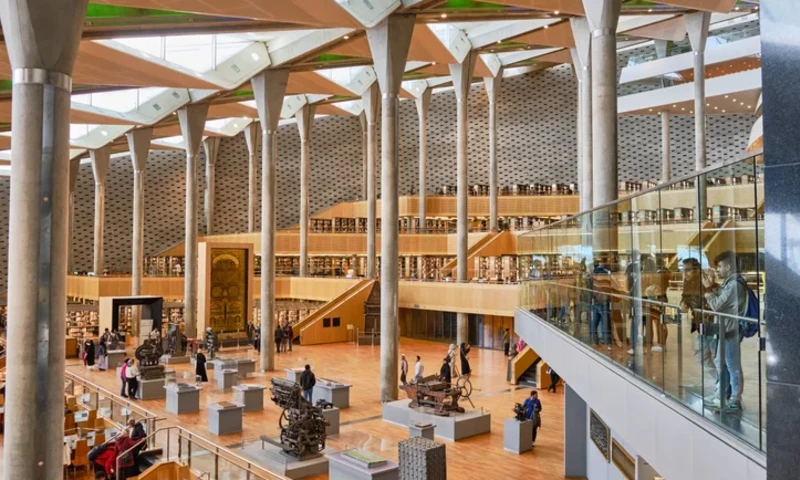
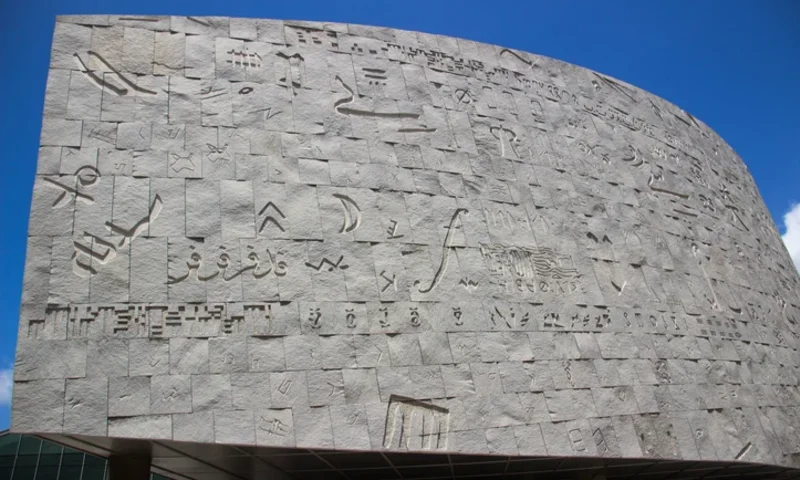
Egypt opened it in the early 2000s, close to where the ancient institution once stood—built, quite deliberately, as its modern successor. It sits right on the water. Reading rooms, archives, exhibition spaces—all of it designed around the same scholarly purpose the name is borrowed from.
Walk inside, and it doesn't feel like a museum piece pretending at history. It's a working institution. The exhibition halls trace Alexandria's story alongside the story of the ancient library, so the link between the two doesn't need much spelling out once you're standing in front of it. There's a planetarium. A manuscript museum too. Both lean into that same restless, cross-disciplinary curiosity the Mouseion was known for centuries ago.
If it's the history of the library of Alexandria that brought you here, the Alexandria Bibliotheca is about as close as you'll get to touching that legacy in person—through the exhibits, and through the building itself.
What Else Is There to See Near Alexandria's Historic Waterfront?
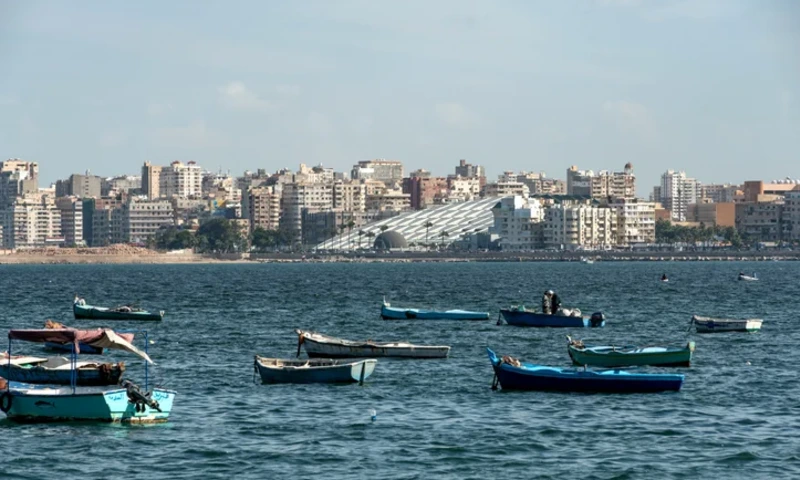
Alexandria never really stopped being a Mediterranean port, and that identity shapes almost everything around the library sites. Alexander the Great founded the place. The Ptolemies built it up, and the Romans after them, and you can still trace that layering along the coast and through the city's older quarters.
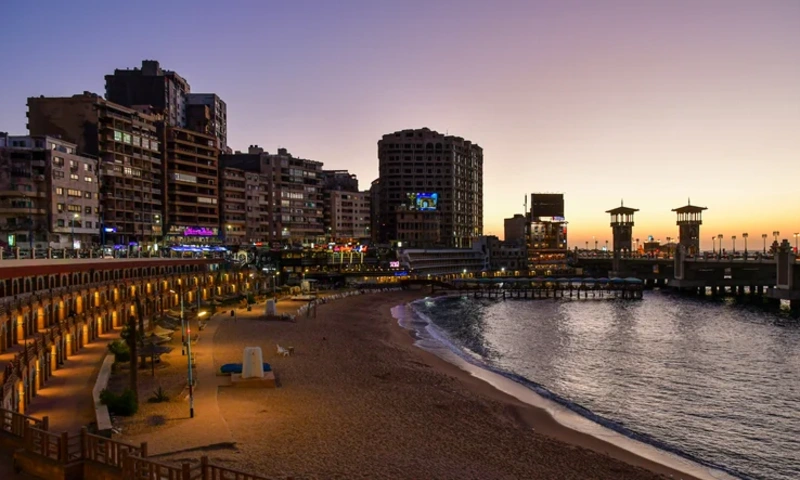
The corniche pulls a lot of it together. Long, walkable, right along the coast—and it links several of these sites without needing a car. Walk it for even twenty minutes, and you'll understand the city's relationship with the sea, the same relationship that once made Alexandria a center for trade as much as scholarship.
Because Alexandria works as both a historic site and a genuinely busy modern city at the same time, a visit built around the library of Alexandria tends to pull in other eras almost without trying—filling in the rest of the story of how the city changed after its founding.
Is the Library of Alexandria Worth Visiting With Kids or Casual Travelers?
It is, and not only for the history-obsessed. The Bibliotheca Alexandrina is built to be approachable—exhibition halls, a planetarium, and open public spaces that don't demand any prior knowledge of the ancient library of Alexandria to enjoy. Families who head to the waterfront afterward will find the corniche flat and easy, which matters once younger travelers start losing steam.
What Should You Know Before Visiting?
Most people treat Alexandria as one stop inside a bigger Egypt trip, usually tacked onto Cairo since the distance between the two isn't much of a barrier. Wear shoes you can actually walk in—the main sites are spread along the waterfront and through the city center, and you'll cover more ground than you'd think.
If the ancient and Ptolemaic-era history is what you're really there for, give yourself enough time for the Bibliotheca Alexandrina's exhibition halls, not just its library spaces. The layout keeps research areas separate from what's open to the public, so rushing means missing half of it. Early morning or late afternoon works best for the corniche, particularly once the summer crowds settle in.
Planning something bigger across Egypt? Pair Alexandria with our Cairo and Egypt highlights tour, or dig further into the country's ancient sites through our Egypt travel guides.
FAQs
What was the Library of Alexandria known for?
Mostly its scale and the scholars who passed through it. It sat inside the broader Mouseion research institution, and the people working there covered mathematics, astronomy, literature—a wide spread.
Does the ancient library of Alexandria still exist?
Not physically, no. It declined slowly over centuries rather than vanishing in one moment, and today its legacy lives on through the modern Bibliotheca Alexandrina near the original site.
What is the Bibliotheca Alexandrina?
A modern library and cultural institution, built in Alexandria specifically to echo the scholarly mission of the ancient one. Reading rooms, exhibition halls, a planetarium, a manuscript museum—it's all there.
Is Alexandria worth visiting alongside Cairo?
Most travelers think so. It's a common add-on to a Cairo-based trip, and the distance between the two cities isn't much of a hurdle. Alexandria's Mediterranean waterfront and its Ptolemaic, Roman, and Islamic-era layers give you something genuinely different from Cairo.
How much time should you set aside to visit the library of Alexandria's legacy sites?
Half a day gets you through the Bibliotheca Alexandrina and a walk along the nearby corniche without rushing. Want more of Alexandria's Ptolemaic and Roman-era history? Plan on a full day instead.
