


Introduction
Cairo city is a place where different periods of Egyptian history exist side by side. The capital stretches along the Nile and forms part of a vast metropolitan area that includes modern districts, historic quarters, busy commercial streets, residential neighborhoods, museums, mosques, churches, markets, and major cultural institutions.
For travelers, Cairo is also the main gateway to some of Egypt's best-known archaeological sites. The Giza Plateau lies within the wider Greater Cairo area, while the historic center contains monuments from the Islamic, Coptic, and modern periods. Understanding a few facts about Cairo Egypt before arriving makes it easier to appreciate how these different layers fit together.
Rather than treating Cairo simply as a stop before traveling elsewhere in Egypt, allow enough time to see its museums, historic neighborhoods, religious monuments, and everyday urban life. The city rewards travelers who approach it area by area instead of trying to cover everything at once.
Table of content:
Highlights of Cairo City
-
See the Pyramids of Giza and the Great Sphinx in the Greater Cairo area.
-
Visit major museums displaying objects from ancient Egyptian history.
-
Walk through Historic Cairo and see centuries of Islamic architecture.
-
Visit Coptic Cairo and some of the city's important Christian landmarks.
-
Browse the lanes and shops around Khan el-Khalili.
-
See the Nile as it passes through the Egyptian capital.
-
Experience both historic neighborhoods and modern areas of the city.
Essential Facts About Cairo Egypt
Cairo is the capital of Egypt and one of the country's principal political, cultural, educational, and commercial centers. Its Arabic name, Al-Qahirah, is commonly translated as "The Victorious."
The city was established by the Fatimid dynasty in AD 969, although settlements in the surrounding area are considerably older. Nearby Fustat had already developed into an important urban center following the Arab conquest of Egypt in the seventh century. As Cairo expanded over subsequent centuries, these areas became part of the larger metropolis travelers encounter today.
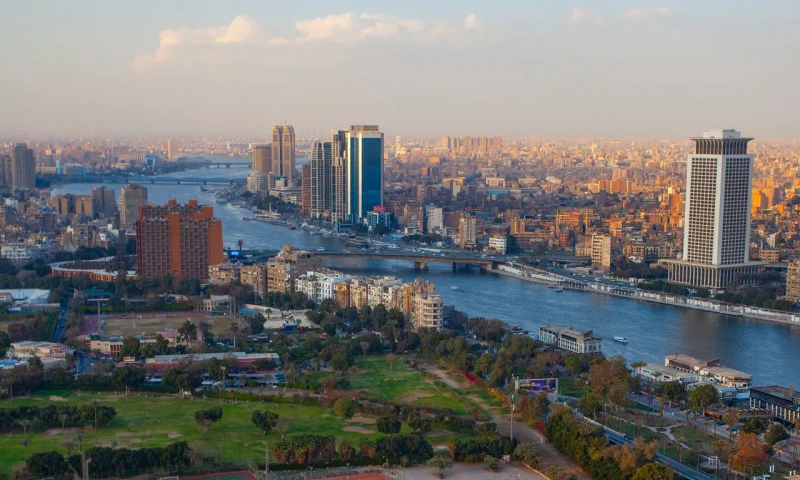
The Nile has played a central role in the development of Cairo and Egypt more broadly. Today, the river divides parts of the modern city, with bridges connecting neighborhoods on either side and the islands within it.
Cairo is also closely associated with Giza, although they are administratively separate. This distinction matters when planning sightseeing. The Pyramids of Giza and Great Sphinx are in Giza Governorate, but they form an essential part of most Cairo itineraries and are readily associated with a stay in the capital.
The city's architectural identity reaches far beyond ancient Egypt. Mosques, madrasas, gates, churches, nineteenth- and twentieth-century buildings, markets, and contemporary developments all contribute to the appearance of modern Cairo city.
What to See in Cairo City
Cairo is best understood through several distinct areas, each representing a different chapter of Egyptian history. Combining archaeological sites with museums and historic neighborhoods gives a more complete picture of the capital.
The Giza Pyramids and Great Sphinx
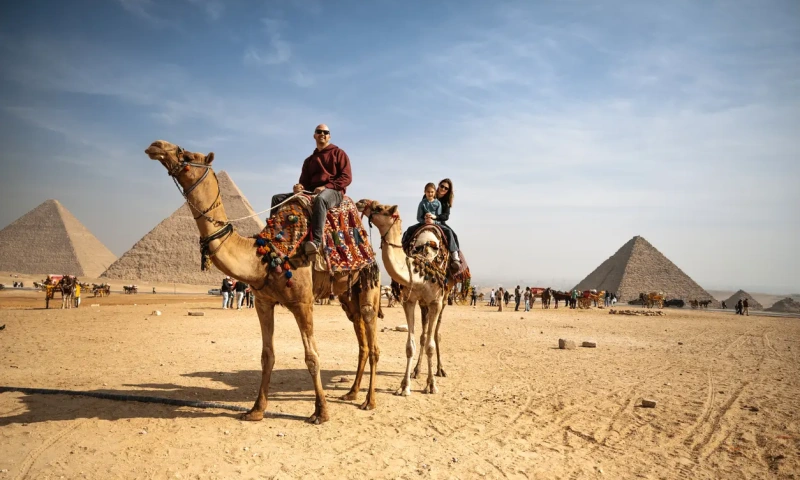
The Giza Plateau is home to the pyramids of Khufu, Khafre, and Menkaure, together with smaller associated structures and the Great Sphinx. Although the plateau is technically in Giza rather than Cairo Governorate, it is one of the principal places visited from Cairo.
The Great Pyramid of Khufu is the largest of the three main pyramids and the only surviving Wonder of the Ancient World. Exploring the plateau also helps put the scale of ancient Egyptian royal building projects into perspective.
Travelers interested in Egyptian archaeology may want to combine Giza with a museum visit. Seeing objects from ancient Egypt alongside the monuments themselves provides useful historical context.
Historic Cairo
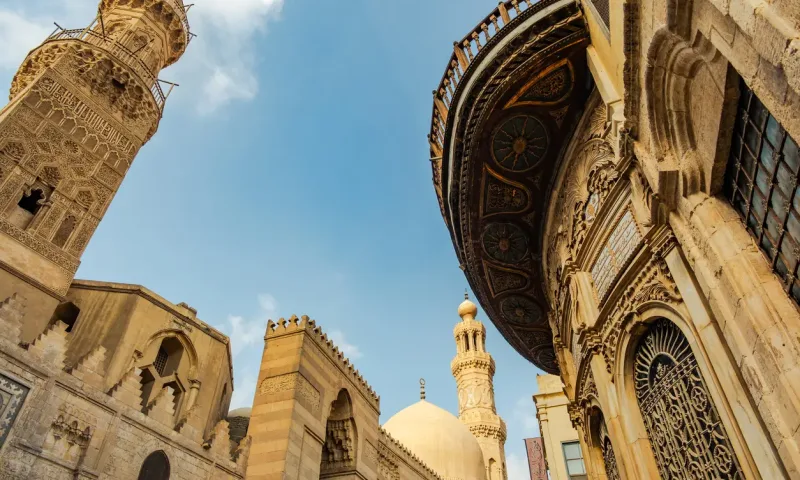
Historic Cairo contains an exceptional concentration of Islamic architecture spanning many centuries. Mosques, schools, mausoleums, gates, and traditional streets reflect the periods of successive dynasties that shaped the city.
Al-Muizz Street is one of the most rewarding areas to explore on foot. Its architectural monuments reveal how Cairo developed as a center of religion, commerce, education, and government.
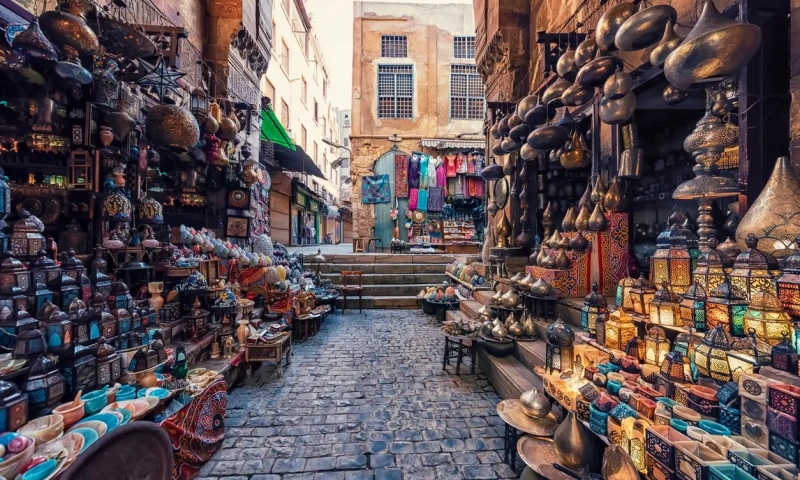
Nearby, Khan el-Khalili remains closely associated with traditional shopping in Cairo. Its lanes contain shops selling souvenirs, jewelry, decorative objects, textiles, spices, and other goods, alongside cafés and small businesses.
Coptic Cairo
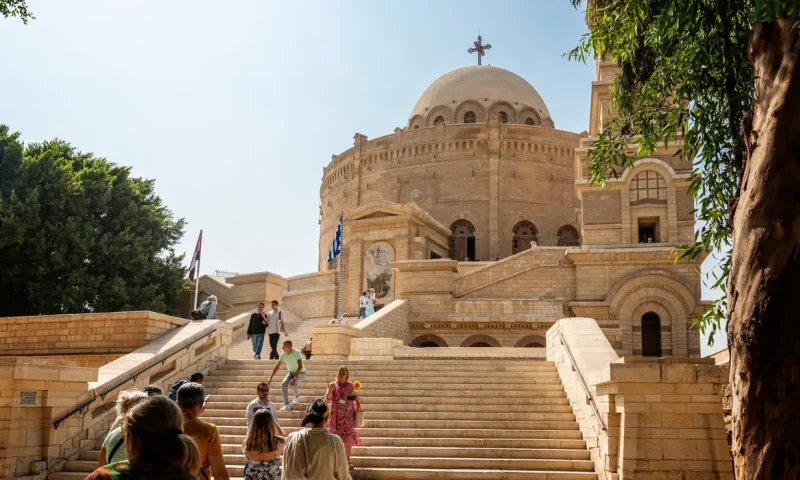
Coptic Cairo offers another perspective on the capital's history. The district contains important Christian sites and forms part of Old Cairo, an area connected with some of the earliest chapters of the city's development.
Among its best-known landmarks is the Hanging Church, one of Cairo's historic Coptic churches. The area can be incorporated into a broader day devoted to the religious and architectural history of the Egyptian capital.
Museums and Egyptian History
Museums play an important role in understanding Cairo because the city's history covers far more than a single archaeological period. Collections devoted to ancient Egypt allow visitors to examine sculpture, funerary objects, jewelry, everyday items, and other material that provides context for archaeological sites across the country.
A museum visit can be particularly useful near the beginning of an Egypt itinerary. Objects that may initially seem isolated become easier to understand once they are connected to specific rulers, periods, religious beliefs, and archaeological locations.
Understanding Cairo's Neighborhoods and Daily Life
One of the most useful facts about Cairo Egypt for first-time visitors is that the capital cannot be understood as a single compact sightseeing district. Attractions are spread across different parts of Greater Cairo, so grouping visits geographically can make a significant difference to the pace of a trip.
Downtown Cairo reflects an important period of the city's modern development, with broad streets, squares, commercial buildings, cafés, and shops. Zamalek, located on Gezira Island, has a different character, while districts farther east represent later stages of Cairo's urban expansion.
The Nile provides a natural reference point when learning the city's geography. Several major districts lie beside the river, and bridges connect central Cairo with Giza and the islands.
Local food also forms part of everyday life. Egyptian dishes, bakeries, cafés, restaurants, and street-side food businesses are found throughout the capital. Travelers who want to understand contemporary Cairo should leave some room in their schedule beyond archaeological sightseeing.
Planning a Visit to Cairo
The size of Cairo city makes advance planning useful. Rather than selecting attractions only by popularity, look at their locations and organize each day around sites that can sensibly be visited together.
A day centered on Giza, for example, has a very different geographical focus from one devoted to Historic Cairo. Coptic Cairo can also be combined with other sites in Old Cairo, depending on the itinerary and available visiting hours.
Traffic conditions can influence travel times considerably, so a schedule with some flexibility is generally more practical than a tightly packed list of stops. Private transfers, organized tours, taxis, and ride-hailing services are among the transport options commonly used by visitors.
Comfortable footwear is useful when visiting archaeological sites and historic streets. Lightweight, respectful clothing works well for general sightseeing, while modest dress is appropriate when entering religious buildings. Individual sites may have their own photography, ticketing, security, and access requirements, so check current visitor information before arrival.
Cairo can also serve as the starting point for a wider journey through Egypt. Travelers commonly continue south toward Luxor and Assuan or connect with Nile cruise itineraries and other destinations after spending time in the capital.
FAQs
1- What is Cairo city known for?
Cairo city is Egypt's capital and is known for its museums, historic Islamic and Coptic districts, Nile setting, and proximity to the Giza Pyramids and Great Sphinx. It also serves as a major starting point for travelers continuing to other parts of Egypt.
2- Are the Pyramids of Giza actually in Cairo?
The Pyramids of Giza are located in Giza Governorate rather than Cairo Governorate. They are part of the Greater Cairo metropolitan area and are normally visited while staying in Cairo or Giza.
3- What are some useful facts about Cairo Egypt before visiting?
Among the most useful facts about Cairo Egypt are its large geographical scale, the distance between different sightseeing areas, and the importance of planning attractions by location. Cairo also contains historical layers extending from ancient and Coptic heritage to Islamic and modern Egyptian history.
4- How many days should travelers spend in Cairo?
The ideal stay depends on the places included in your itinerary. Travelers interested in Giza, major museums, Historic Cairo, Coptic Cairo, and different parts of the modern capital should allow enough time to visit these areas without placing every attraction into a single day.
5- Is Cairo only about ancient Egyptian history?
No. Ancient Egyptian archaeology is an important part of a Cairo visit, particularly around Giza and in museum collections, but the capital also preserves major Coptic and Islamic monuments alongside modern Egyptian neighborhoods and institutions.
