


Introduction
The Esna temple is located in the heart of a bustling market town on the Nile’s west bank, 55 kilometers (35 miles) south of Luxor. The only access to the temple is a flight of steps, as the surviving hall is located about nine meters below the present street level. Inside the temple’s colonnaded halls are ancient hymns and astronomical markings, part of a remarkable celestial ceiling. This guide explores the history of the temple, its dedication, and its significance for those touring the River Nile between Luxor and Aswan.
Standing inside the Esna temple and seeing the hypostyle hall and the zodiac ceiling are experiences that cannot be fully captured in photographs. Reserve your Nile route with OFT Travel or combine Egypt with other destinations on our multi country tours.
Table of content:
- What Are the Key Facts About the Esna Temple’s History and Location?
- What Is the History of the Temple of Khnum?
- What Is There to See Inside the Hall?
- What Makes the Zodiac Ceiling Significant?
- How Do You Get to Esna Temple From Luxor or a Nile Cruise?
- Which Other Temples Are Worth Visiting in This Area?
- FAQs
What Are the Key Facts About the Esna Temple’s History and Location?
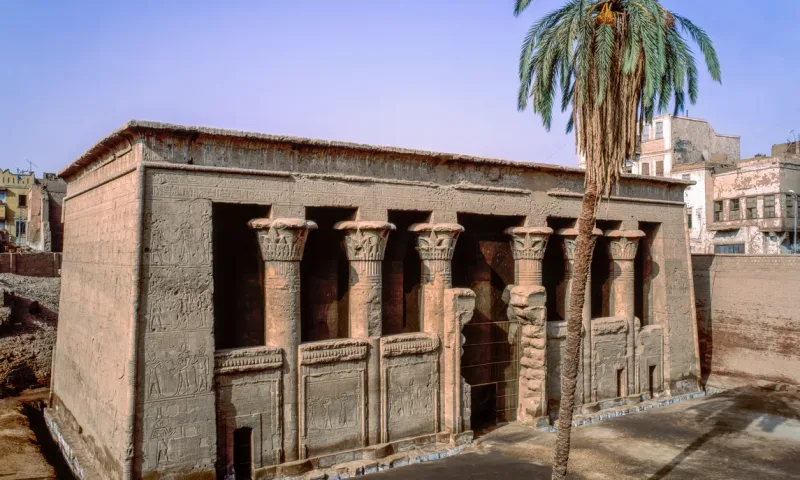
While most ancient Egyptian temples are built on elevated ground, this one is unusual in being located below the surrounding level. Over the centuries, the floodplain of the Nile has left its deposits around the temple and given rise to people living on top of its remains. In the early 19th century, under Muhammad Ali Pasha, the temple was apparently used to store cotton.
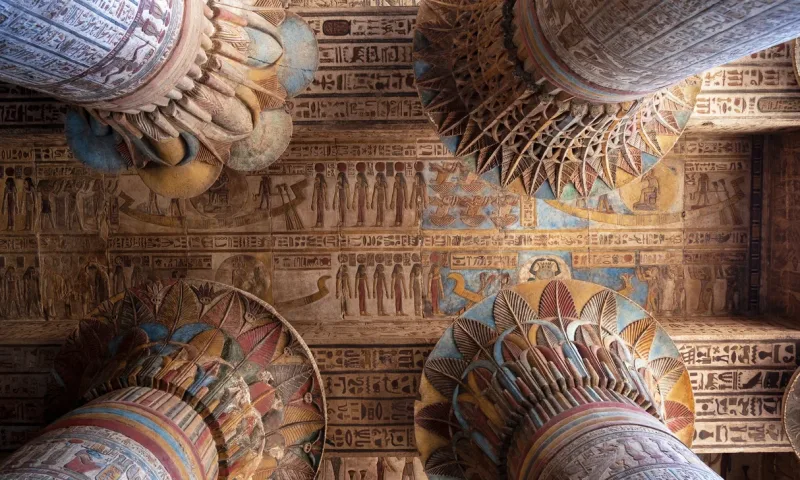
The present building only includes the prostyle hall, once the entrance to the ancient sanctuary. The rest of the temple complex is buried beneath modern Esna. Constructed of red sandstone, the Esna temple’s hall was roofed, and the painted ceiling has survived in situ above the colonnades. The hall is located some two hundred meters from the landing stage on the Nile, a short walk from most visiting boats.
Since Esna is located about 55 kilometers south of Luxor, many travelers enjoy adding this temple to their itinerary when visiting Luxor. Our Luxor Museum and Valley of the Queens guide make ideal combinations for exploring this region.
What Is the History of the Temple of Khnum?
Tourists visiting the temple of Khnum are often interested in learning about the temple’s dedication. The ancient name for this town was Snebsen, and the god to whom this temple is dedicated is Khnum – in Egyptian script, Khnum. He is the ram-headed creator god linked to shaping human beings on a potter’s wheel from Nile mud. Locally, he was also the god of the life-giving inundation.
The relief carvings name his consort, Menhit, along with Nebtu, Heka, and the creator goddess Neith. Some accounts refer to Khnum and Neith as the two aspects of a single creator, the father and mother of everything.
There has been occupation on this site since pre-dynastic times, but the present structure is made up of temples belonging to the Ptolemaic and Roman periods. The hall for which we now have the ruins began under the Roman emperor Claudius and was decorated up to the reign of Decius, around AD 250.
What Is There to See Inside the Hall?
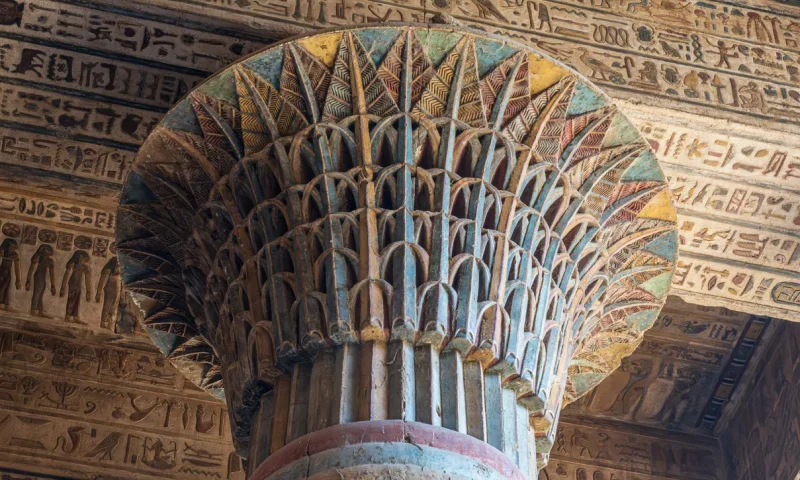
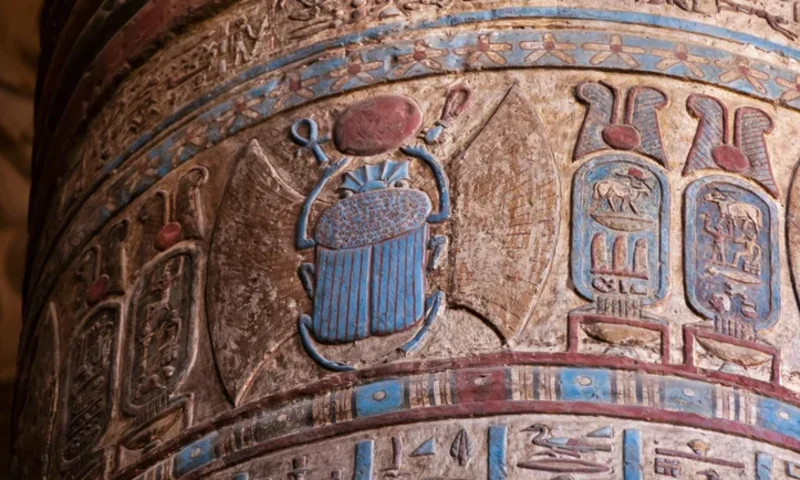
One of the unique aspects of visiting this temple is the flight of steps leading down from street level to the large hall, where twenty-four columns are elaborately decorated from base to an impressive height of some fifteen meters. Exploring the temple, visitors will see that the walls and columns are covered with carvings and hieroglyphs recording various hymns, rituals, and historical records, making it a fascinating stop on any Egypt tour.
On the temple’s walls are the festival days of the year in ancient Egypt, and some of the hymns are written in cipher script. The carvings that depict the history of the building and its dedication date from the Roman period and are among the last surviving examples of hieroglyphics in Egypt.
On the outer walls, the carvings depict Roman Emperors in the traditional pose of facing an enemy and charging – Domitian appears on the south wall and Trajan on the north. With a local guide, it is possible to gain insight into the history of the temple and its dedication when visiting Esna with a Nile cruise. The sightseeing in Esna includes visiting the temple and exploring the bustling market town located on the west bank.
What Makes the Zodiac Ceiling Significant?
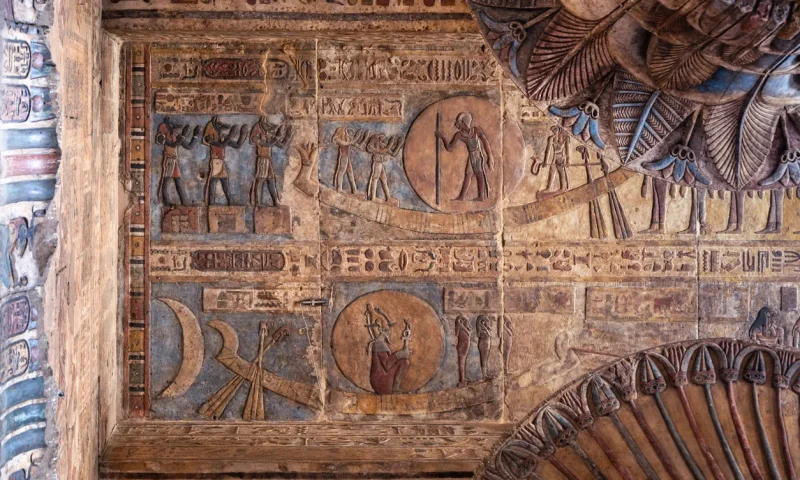
The ceiling had been dark with years of soot from torches, cooking fires, and candles, and had also been soiled with bird droppings until recent cleanings by an Egyptian-German research team with the University of Tuebingen began in 2018. Exposing the painted decorations, the cleanings revealed the twelve zodiac signs from Aries to Pisces, as well as the planets Jupiter, Saturn, and Mars. Researchers have also identified star clusters referred to as the seven arrows by the ancient Egyptians, which were used to determine the time.
This painted zodiac is one of only three complete examples of its type known in Egypt, the others being at Dendera. The zodiac was brought to Egypt from Babylon during the last centuries BC by the Greeks and incorporated into the Egyptian tradition. The zodiac signs were depicted using the familiar gods and goddesses of the Egyptian pantheon.
Further remarkable discoveries were made in 2023 when additional scenes were uncovered, including the goddess Sothis at the beginning of the inundation and the god Khnum Re with four ram heads.
How Do You Get to Esna Temple From Luxor or a Nile Cruise?
The town of Esna is located about 55 kilometers south of Luxor on the west bank of the Nile. The ancient hall is a short walk from the landing stage along a flight of steps. Wearing comfortable footwear will ensure that this is a pleasant exploration.
The market town is also a port of call for many ships plying the Nile between Luxor and Aswan as they pass through the Esna locks. The transit takes two to three hours, and many itineraries for a Nile cruise between Luxor and Aswan will include a visit to the temple. A guide will be able to put the carvings and the history of the temples in perspective as part of the tour. Alternatively, compare options on our Nile river cruises or look at combining a visit to Esna with other Egyptian sites on our Egypt travel packages.
Which Other Temples Are Worth Visiting in This Area?
Esna lies between Luxor and Edfu, about fifty kilometers north of Edfu, making it a perfect stop along the way. Closer to Aswan is the massive Kalabsha Temple, dedicated to the ram-headed god and thought to be the largest single temple in the region before the construction of Philae. Seeing these major monuments in sequence allows comparison of their layout and the design of their interior sanctuaries.
FAQs
Where Is Esna Temple Located?
The temple is located in the market town of Esna on the west bank of the Nile, some fifty-five kilometers (35 miles) south of Luxor. It is some two hundred meters from the river landing and nine meters below street level.
Who Was the Temple of Khnum Built For?
The temple is dedicated to the Ram-headed God Khnum, who was said to have shaped human beings on a potter’s wheel from Nile mud. Also named in the reliefs are his consort Menhit, as well as Nebtu, Heka, and the goddess Neith.
What Remains of the Temple Today?
The only surviving structure is the hypostyle hall, with twenty-four columns and a roof. The rest of the temple complex is buried beneath the modern town.
What Is Painted on the Ceiling?
The ceiling contains all the zodiac signs, the planets Jupiter, Saturn, and Mars, as well as the constellations the Egyptians used to measure time. It is one of only three complete zodiacs known in Egypt.
Do Nile Cruises Stop at Esna?
The town is frequently visited by cruise ships passing through on their way from Luxor to Aswan, as the transit through the Esna locks takes two to three hours. It makes a convenient stop for visiting the temple.
