


Introduction
The sweet side of life in Egypt is everywhere you look, whether it be from a street-side sweets counter in Cairo or on the family table round in Ramadan; sugar has a long history here. From syrup-drenched semolina cakes to delicate stuffed crepes, Egyptian desserts run the gamut (and most can be traced back a century or two, sometimes more: some to pharaonic times). If you have a sweet tooth, tasting Egyptian sweets is one of the most straightforward ways to get a handle on food culture in this North African country: these dishes appear at weddings, religious holidays, and simple weeknight dinners, making them part of the domestic experience.
This guide outlines what desserts you should look out for, which ingredients they're based on, and where and when they are best enjoyed during a trip to Egypt.
If local food is part of how you like to travel, explore our Egypt travel packages and plan a journey that gives you time to experience the country's destinations, history, and everyday food culture.
Table of content:
A Sweet Tradition Rooted in Ancient Egypt
Egyptian desserts have a history as old as the time of the pharaohs, when honey was treasured from ancient times for its role as a natural sweetener and in primitive confections served to both nobility and commoners alike. Over centuries, they interacted for the first time with Greek and Roman, then Arab cuisines, adding cooking techniques and new ingredients as well as fat-filled pastry doughs layered with sugar syrups and spiced fillings to patently Egyptian dishes.
Honey, Semolina, and Rose Water
Away from the much sweeter aspects of the pastry, semolina is still one of raw materials for Egyptian sweets, that exposure in cakes like basbousa giving it a dense feel and a slightly grainy texture. Dates make many appearances as well, the nature sweetness, along with their chewy bite. They are rounded out with floral notes of rose water and orange blossom water, which lend a profile to Egyptian desserts that is definitely not the same as those you would have elsewhere in the region. It is these ingredients that explain why so many Egyptian sweets taste both the same and different to what you may know.
To pair Egypt's food traditions with its historical and cultural highlights, explore our Best Egypt Tour and experience more of the country along the way.
Must-Try Egyptian Desserts
Here are some iconic Egyptian desserts that you should try in order to get started on any visit:
Basbousa
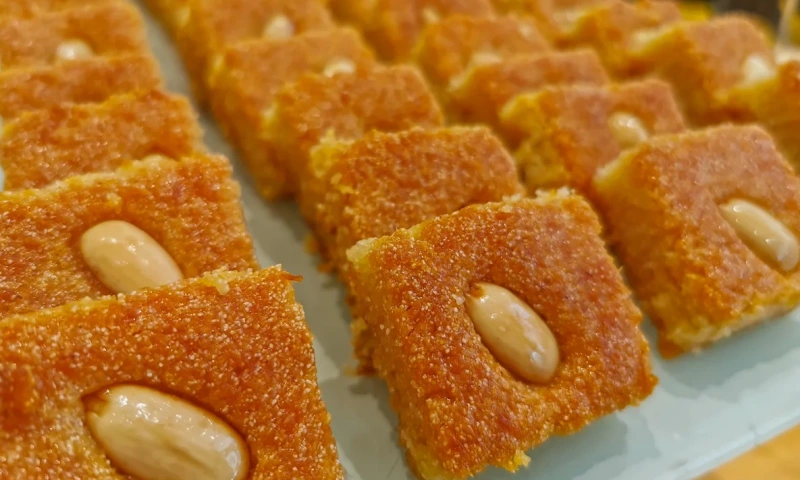
Of all the Egyptian desserts, Basbousa is perhaps most well-known. Bakers slice the semolina cake into diamond shapes, soak it in sugar syrup, and frequently garnish with almonds. Certain variations use coconut or yogurt in order to level out the sweetness, but the result should be damp yet never soggy. It can be seen on nearly every pastry shop counter in the country and also packs well for tourists looking to indulge in local food.
Kahk
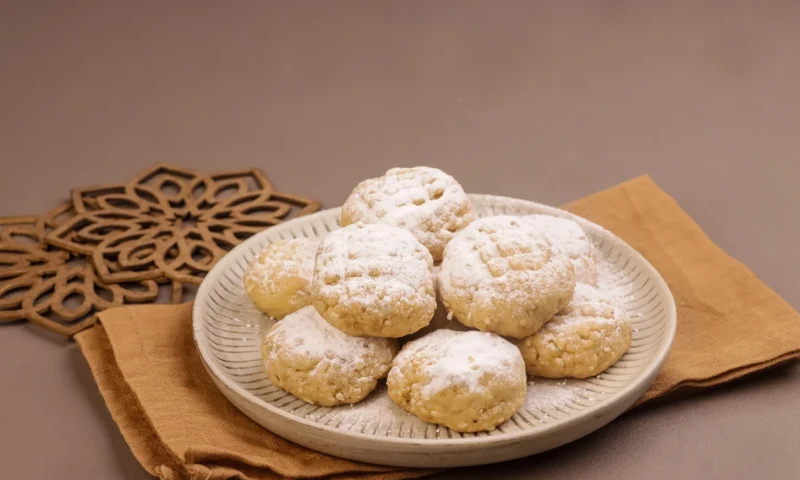
Kahk is another sort of Egyptian treat; it falls into a different category, cookies versus cakes. Bakers form the shortbread into rounds, fill with dates or walnuts, and coat with powdered sugar. In the days leading up to Eid, families in Egypt bake massive stashes of the cookies: they're as much a ritual as they are a recipe—households have passed down the same shortbread technique for generations.
Konafa
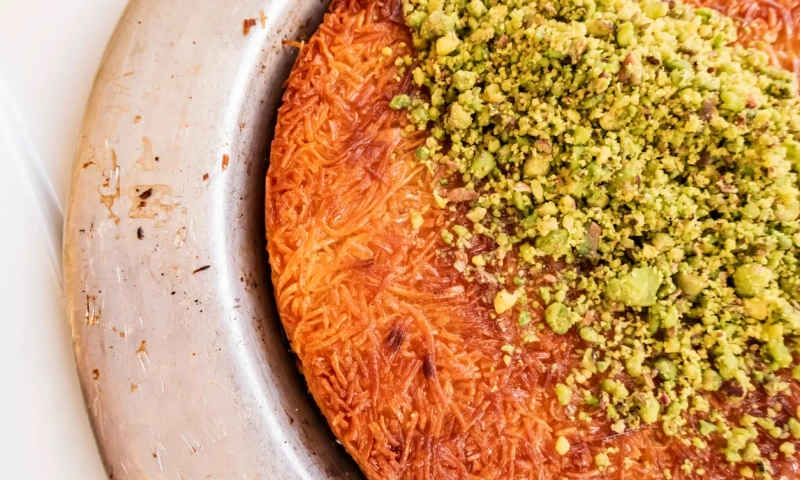
Konafa, or kanafeh as it is sometimes spelled, uses strands of fine pastry rather than layered dough. Depending on the region, bakers may stuff the cake with sweet cream and soft cheese or nuts before soaking in syrup. It's the play between crunch and softness that helps ensure this treat remains a staple well beyond Egypt, where street vendors still serve it warm from broad copper trays.
Om Ali
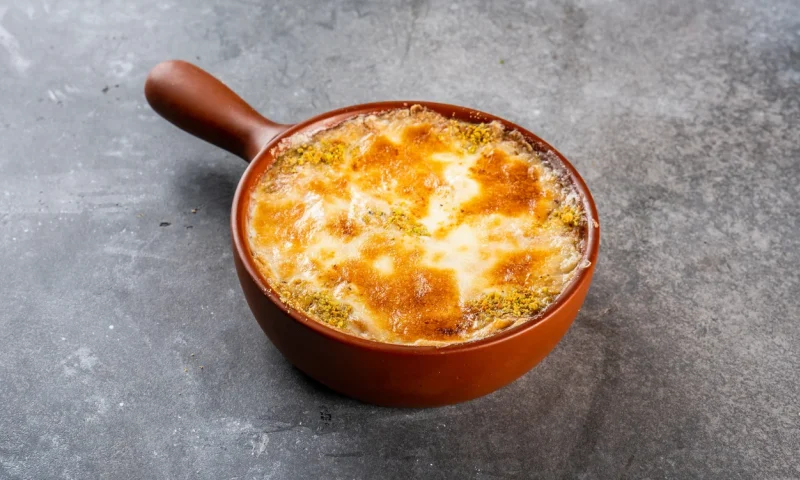
Fresh out of a pan — Om Ali is the unofficial custard-like national dessert in Egypt. This warm bread pudding has a flaky crust with milk, sugar, and nut & raisin filling, baked till the top turns golden. It appears on almost every traditional menu, from home kitchens to restaurants serving "classical" Egyptian dishes.
Baklava
Its Ottoman-era roots are still evident in the cooking technique, which made its way to Egypt through centuries of trade and cultural exchange that influenced many dishes across the region. Layers of thin pastry with nuts bound together in sugar syrup, cut into diamond- or square-shaped bites. Egyptians versions typically use a pistachio or walnut filling, and the dessert also keeps well, so it makes another practical souvenir for travelling families.
Qatayef
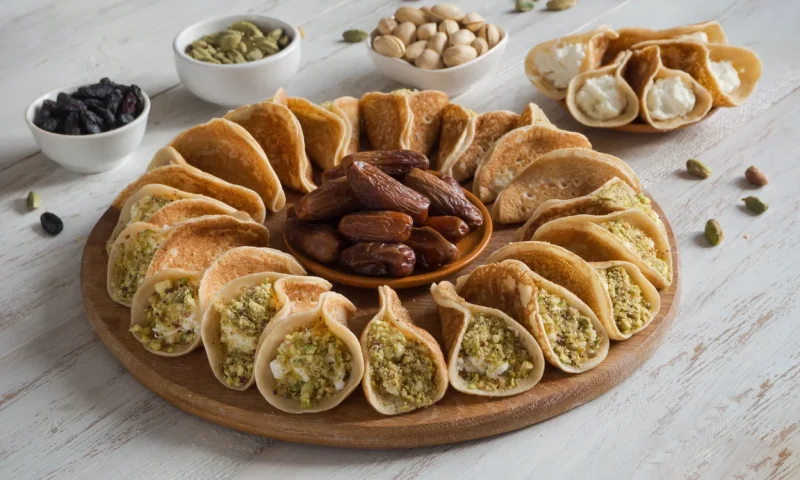
Little else comes close to capturing the joyous interstitial period that passes between iftar and suhoor during Ramadan whilst Qatayef seem all but compulsory at this time of year; hundreds (yes, hundreds) of little stalls dot Cairo and Alexandria each evening with predominantly fried or boiled stuffed pancakes fried on the spot. Fillings vary from sweet cheese to chopped nuts, and the pancakes are closed and sealed or open and filled depending on the baker. During the holy month, any new visitor should consider this a staple to be tried in addition to other Ramadan food customs in Egypt.
Egyptian Sweets and Their Role in Celebrations
Egyptian sweets rarely stay confined to dessert menus. You can find Kahk on Eid, qatayef to break the Ramadan fast every night, and usually some basbousa or konafa for weddings/ big family gatherings all year long. Blame it on the recipe slightly less this time, because sweets during these occasions were eventually all about making a gesture giving visitors something sweet is also an old-age sign of hospitality in Egyptian households.
Eid and Ramadan Traditions
Kahk and qatayef are the two Egyptian sweets most closely tied to the religious calendar. Kahk appears in huge batches ahead of Eid, often baked communally by several generations of one family, while qatayef is sold fresh every evening throughout Ramadan as families gather to break their fast together.
Weddings and Family Gatherings
One of the most traditional sweets, Basbousa, konafa, and baklava find their way on numerous occasions, namely weddings and other family ceremonies, typically served discreetly over large trays for sharing. You pass down recipes from mother to daughter, or between one bakery owner and an apprentice — with only the tiniest nuances in spice or stuffing distinguishing one family's version of a dish from another.
Where and When to Try Egyptian Desserts
Most of these desserts are available year-round in pastry shops across Cairo, Alexandria, and Luxor, although supply and variety go into overdrive during Ramadan and Eid. The freshest food and most variety of flavors are found in neighborhoods rich with a local food culture, as opposed to tourist zones.
Best Cities for Egyptian Sweets
Cairo simply has the widest selection based just on its size, so the traditional dedicated pastry shops in older neighborhoods are often better than the younger ones at depth of flavor. Alexandria and Luxor offer the same staples, with some smaller towns likely to have more limited ranges during periods away from holiday seasons.
Dietary Considerations
Portions are typically huge and syrup-laden, so sharing a plate two or three ways is more of a standard than an odd request. For those with dietary restrictions, it is a good idea to ask about ingredients directly, as nuts, dairy, and gluten are often hidden in many of the classic dishes explained here. If this isn't enough and you want to explore more than dessert with a wider scope of local food, the full Egyptian culinary guide offers more coverage on savory dishes to share these pastries with.
To experience Egypt beyond its landmarks and make local food part of your journey, explore our Egypt trip package and plan a route through the country's history, culture, and culinary traditions.
FAQs
Which are the most famous desserts in Egypt?
Some of the most popular Egyptian desserts: Basbousa, kahk (a type of cookie), konafa, Om Ali (a cream dessert), baklava, and qatayef. Some have their own unique texture and flavor — syrup-soaked semolina cakes, stuffed shortbread cookies.
Are Egyptian sweets very sugary?
Since the majority of Egyptian pastries are based on sugar syrup, honey or powdered sugar, they are filling and heavy and often best eaten in small amounts. Usually, they are paired with unsweetened tea or coffee to neutralize the sweetness.
When should you be trying Egyptian desserts?
Most traditional Egyptian dishes, like qatayef and kahk, for example, are associated with Ramadan and Eid, respectively, so no doubt the biggest variety of dessert appears during those holidays. That said, staples such as basbousa and konafa can be found year-round at pastry shops.
Are nuts and dairy ingredients present in Egyptian dessert?
In many Egyptian desserts, nuts, milk, or cheese are also common components, such as for example konafa, baklava, and Om Ali. Travelers with food allergies should consult vendors before ordering.
What is the difference between konafa and baklava?
Konafa is shredded pastry soaked in syrup, layered with cream or cheese while baklava is thin sheets of pastry filled with chopped nuts. Both of these are among the most popular desserts in Egypt—they are distinguished, however, by their textures (crisp and soaked with syrup for konafa; flaky and crunchy for baklava).
