


Introduction
The Dendera Temple is located on the west bank of the Nile close to Qena. It was originally built to honour Hathor, the goddess of love, music and joy, by the Ancient Egyptians. The temple contains many incredible features which tell her story, including painted ceilings, carved columns and underground crypts.
The Temple of Hathor (or Tentyris as the Greeks called it) was built upon an old sanctuary that had been rebuilt many times by previous generations. The temple that stands today was mainly built in the late Ptolemaic and Roman periods. This means many of the walls contain features from both cultures. If you are looking to take a wider trip around Upper Egypt, we have Egypt travel packages to help plan your route through Luxor and beyond.
Table of content:
What is the history of the temple?
The temple has a long history of being honoured by Kings to Hathor. The current temple was built by the late Ptolemaic kings, who were Greek-speaking and ruled after Alexander the Great. The carving and decoration continued under the Roman emperors, such as Tiberius.
This means the temple includes features from both cultures. The Roman emperors are shown as Pharaohs offering gifts to the gods. On the back wall, we can see the relief of Cleopatra VII. With the help of a guide, you can learn how the foreign rulers were integrated into the Egyptian religion.
This is common with many other Ptolemaic and Roman temples, including the double temple to Sobek and Horus at the Kom Ombo Temple. This shows how the later rulers stuck to the traditions of the older temples.
Edfu and Kom Ombo are two temples visited on the Nile river cruises between Luxor and Aswan. They are both from the late period of temple building, meaning they link well with this temple.
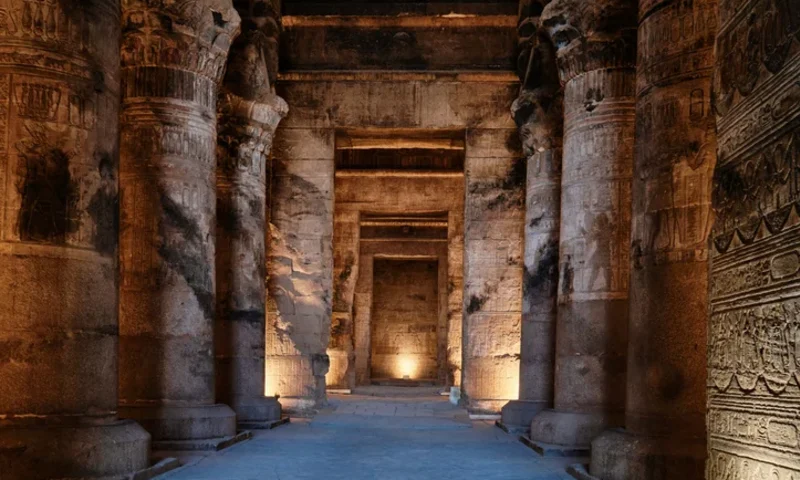
Why did the Ancient Egyptians worship Hathor here?
Hathor was in charge of love, music, and joy. This means she was worshipped in many aspects of life and religion. She was also known for her sacred symbols, including the copper mirror and sistrum. These can be seen throughout the temple in the reliefs. Isis was also worshipped here, so there is a smaller temple to Isis.
Many pilgrims would visit this site to benefit from her healing powers. The Roman-era sanatorium suggests this. Many festivals would be held based on the ancient calendar. The priests would continue traditional rituals. This means that, with knowledge of the history, the carvings can be viewed as a story of faith, healing, and celebration.
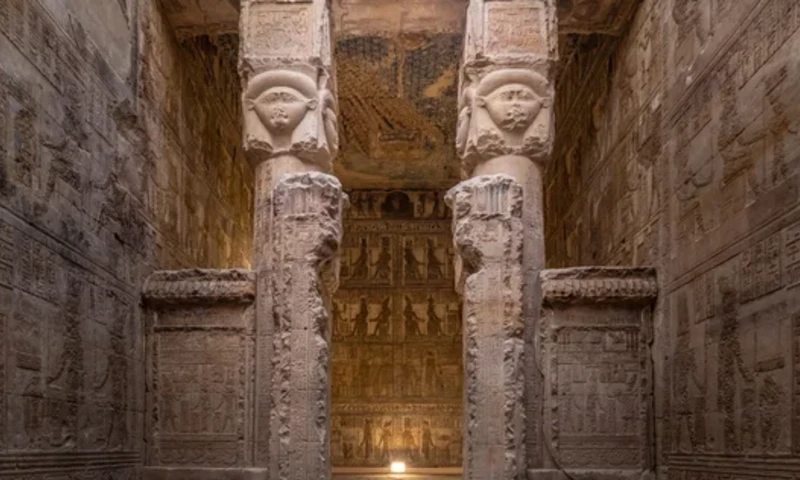
What is inside the hypostyle hall and temple?
Hathor-headed columns
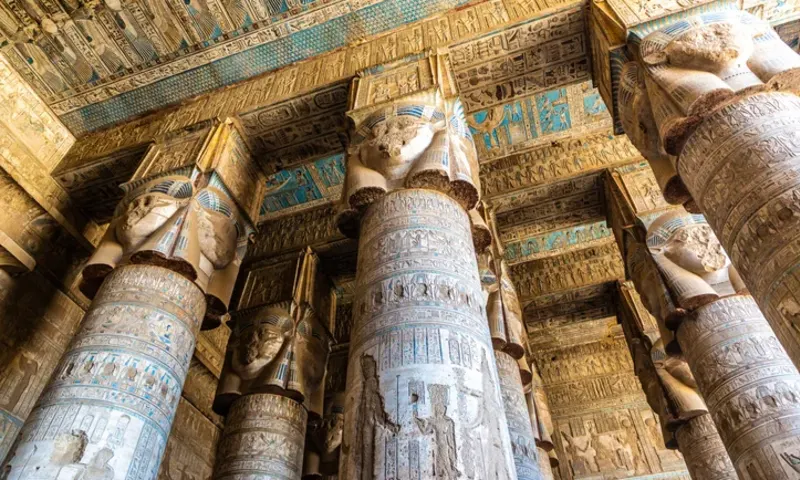
There are 24 columns that support the roof. Each column has a face of Hathor at the top. The walls show images of the Pharaoh offering Hathor a copper mirror, one of her sacred symbols. Your guide will also be able to show you the sistrum, a ritual rattle used in her worship. This is reflected in the design of the columns.
Painted ceilings
Look up! The ceiling has an intricate star map with images of the sky goddess Nut and parts of the zodiac (introduced by the Romans). The soot has been carefully removed by the conservators, meaning the colours are vibrant and you can easily follow each figure.
Inner rooms
Behind the hall are a series of smaller rooms. The walls have images of ritual offerings. Many of the royal cartouches have been left blank to show the struggles of the dynasties. The last room leads to the stairs to the roof.
What can you see in the underground crypts and roof?
Long, narrow crypts run along the walls and under the temple. They are split into multiple levels. The priests would store sacred items and treasures here. Many of the walls have reliefs of Hathor and her sistrum. Only high-ranking priests would have had access to these rooms through secret passageways.
Roof chapels
Stairs with images of Hathor lead to the roof of the Temple of Hathor. There are chapels to Osiris and a kiosk to Hathor. The stairs allow you to get a better look at the astronomical carvings.
Dendera Zodiac
There was once a circular relief of constellations and zodiac signs on one of the roof chapels. This was sketched by French scientists during Napoleon’s campaign in Egypt. The original can be seen in the Louvre in Paris. There is a replica here. The relief was created in the first century BC by Egyptologists.
Astronomy is a big part of the decoration in the temple. From the ceiling in the main hall to the roof chapels. If you are interested in the night sky, our total eclipse egypt guide explains how the totality will reach Luxor on 2 August 2027.
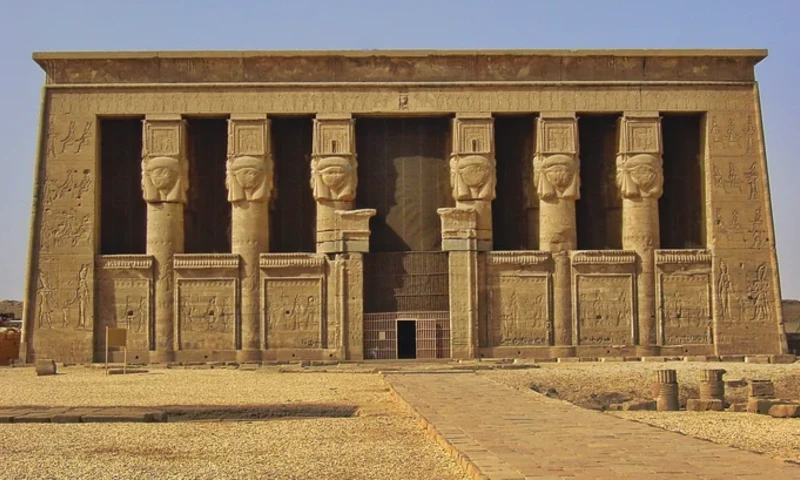
What else stands within the Dendera Temple complex?
There are many other features on the site. Two mammisi, one Ptolemaic and one Roman, celebrate the birth of the divine child. There is also a Roman-era sanatorium, a well, a sacred lake, and a small temple to Isis. There is also a Coptic church, which shows how long this site has been in use.
Many pilgrims would visit here to benefit from Hathor’s healing powers. The buildings around the temple show that this was a centre of religion. Walking around the temple before or after will help you understand how this site was used for worship, healing, and rituals.
Seeing the Dendera Temple will allow you to see the painted ceilings, crypts, and roof chapels tell their own story. There is so much more detail than any photograph could capture. If you are looking to do a longer route around Egypt, we have multi country tours to help you. Alternatively, get in touch with the OFT travel team to discuss your plans.
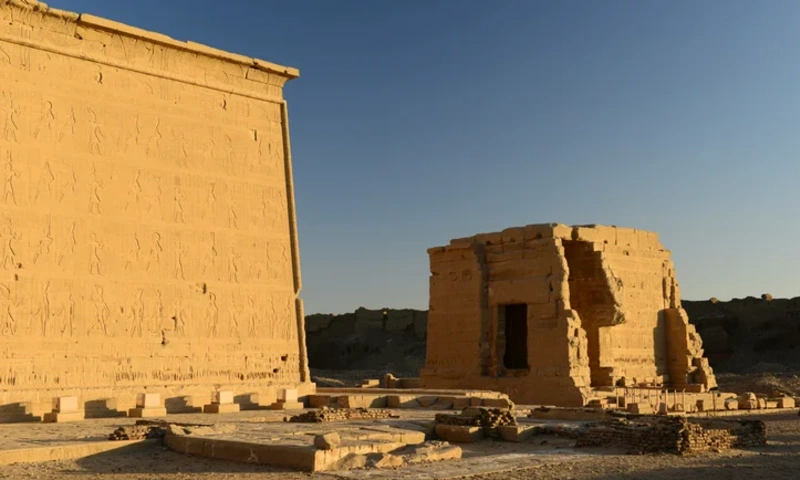
What should you know before visiting Dendera Temple?
The site is located on the west bank of the Nile, close to Qena. This is approximately 60km north of Luxor. It is best to visit with a guide to help you understand the reliefs and astronomical ceilings. Many of the symbols can be easily missed. The stairs to the roof and narrow crypts are best with comfortable shoes. The whole site is best visited at a leisurely pace.
The Luxor Museum in Luxor provides a closer look at the statues, royal mummies, and the Wall of Akhenaten. This adds more context to the scenes.
The painted tombs in the Valley of the Queens, such as the Tomb of Nefertari, provide a different look at how the Egyptians decorated their walls. This helps you appreciate the restored ceiling.
FAQs
Where is the Dendera Temple located?
The complex is located on the west bank of the Nile near Qena. This is approximately 60km north of Luxor. The temple is usually visited as a day trip from Luxor.
Which goddess is worshipped in the Temple of Hathor?
The main temple is to worship Hathor, the goddess of love, music, and joy. However, there is a smaller temple to Isis within the complex. The two goddesses were worshipped together.
When was the temple built?
The temple was mainly built during the late Ptolemaic period. The Roman emperors added to the decoration. However, there were previous sanctuaries on the site, meaning the history of worship goes back much further.
Where is the Dendera zodiac now?
The original relief can be seen in the Louvre in Paris. There is a replica on site in the roof area.
What can be seen in the crypts and roof?
The crypts have carved reliefs of Hathor and a sistrum. The roof has chapels to Osiris and a kiosk to Hathor. There are also astronomical carvings.
