


Introduction
Two seated figures loom over the countryside on Luxor’s West Bank, long before you come upon the tombs and temples that lie beyond them. The Colossi of Memnon are the surviving front of the mortuary temple of Amenhotep III, a vast complex that has mostly disappeared. This guide covers who the statues portray, why a Greek name has survived, and how to see them on your trip to Luxor.
The Colossi of Memnon reward a short stopover with fascinating details, especially when you understand who these statues are and why Greek and Roman visitors made the journey to see them. If Luxor is just one part of a wider tour, our multi-country tours can help you plan a route through Egypt and beyond. Journeying south along the Nile? The Kom Ombo Temple guide is the next recommended read.
Table of content:
- What Are the Statues of Amenhotep III Known as the Colossi of Memnon?
- What Can You See at the Site of the Colossi?
- Why Does the Memnon Statue Have a Greek Name?
- What Happened to the Temple Behind the Colossi?
- How Can You See the Colossi of Memnon in Luxor?
- What Other Attractions Are Worth Seeing Near the Colossi?Qs
- FAQs
What Are the Statues of Amenhotep III Known as the Colossi of Memnon?
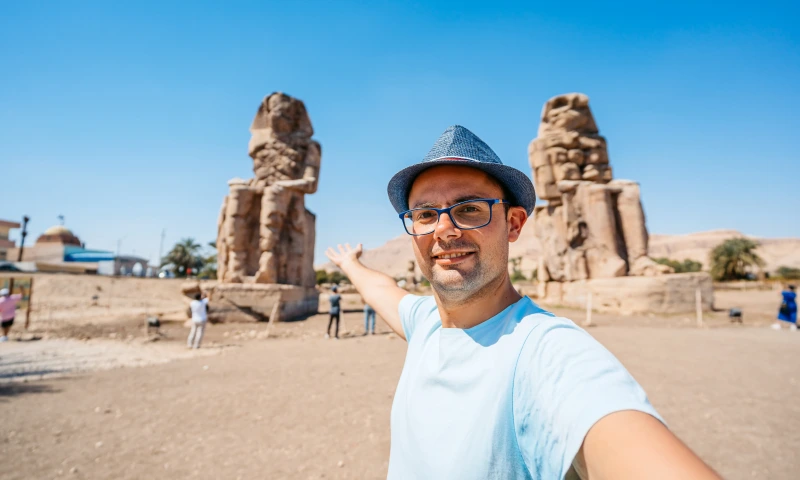
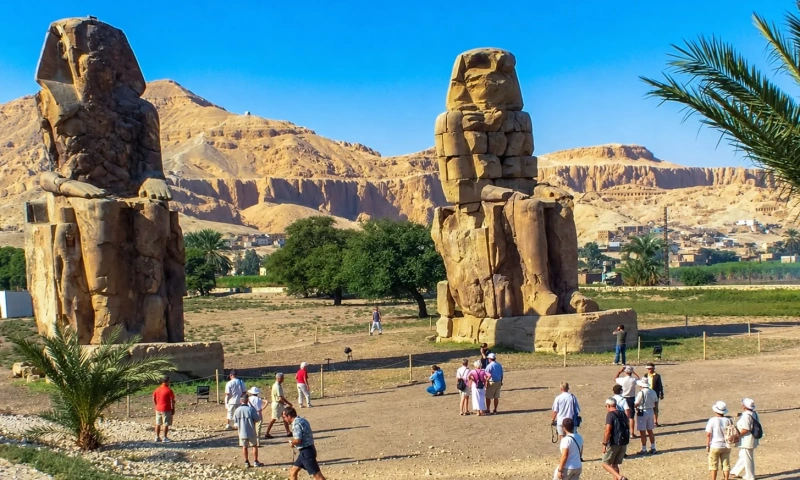
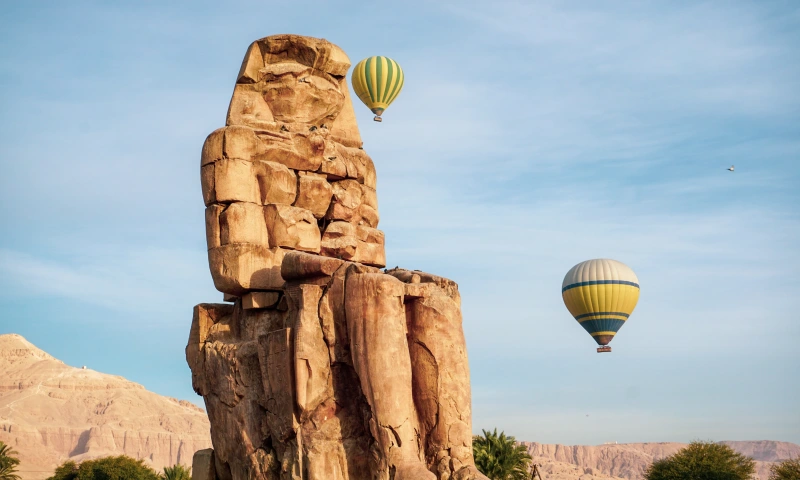
Both of these statues depict the pharaoh Amenhotep III. He’s seated on a throne, with his hands resting on his knees, and looking out towards the east. Roughly 18 metres high (including the pedestal), both of these figures are carved from quartzite.
They once formed part of a temple complex and stand guard at the entrance to the mortuary temple of Amenhotep III. Smaller statues of his queen Tiye and his mother Mutemwiya are carved into the front of the throne. This was once one of the largest temples in Thebes, but centuries of flooding, earthquakes and later building projects have reduced much of it to fragments.
The Colossi of Memnon were among the few elements that have endured the passage of time, and there is more to see nearby from the ancient Theban region. Smaller ancient Egyptian sculpture tends to survive better in indoor conditions, which is why visiting the Luxor Museum is a good follow-up to seeing these statues.
What Can You See at the Site of the Colossi?
A visit to the colossi only takes a short amount of time, but details at the site are worth a closer look. In brief:
-
Two statues of Amenhotep III, each approximately 18 metres in height
-
Figures of Queen Tiye and Mutemwiya carved into the throne
-
Greek and Latin inscriptions on the lower part of the statues
-
The story of the “singing” statue and its connection to a Greek hero
-
A location on the West Bank near other Theban sites
-
Archaeological investigations at the temple site behind the statues
Why Does the Memnon Statue Have a Greek Name?
Ancient Greek visitors to Luxor did not know Amenhotep III. They knew of Memnon, a Trojan hero mentioned in Greek mythology, and decided that the northern statue must depict him instead. The Egyptian name has since been replaced with a Greek alternative, and the name “Memnon” applies to both statues today.
A small earthquake in 27 BC struck the northern statue and affected the way it made noise at dawn, which the Greeks attributed to Memnon pining for the loss of his mother Eos. After visitors became accustomed to the sound, stories of its loss and recovery grew until the sound itself became part of Greek mythology.
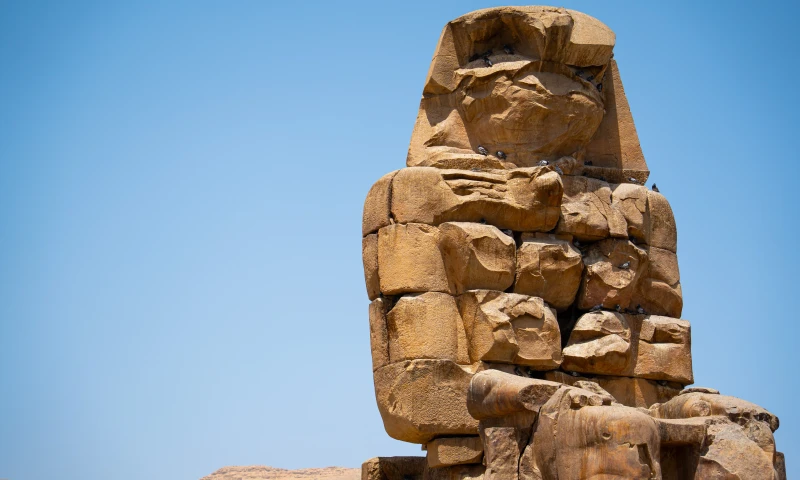
The Roman emperor Hadrian visited the site, and both Greek and Latin inscriptions can be seen on the legs of the northern statue as a result. Other visitors claimed to have heard the voice of Memnon firsthand. Traditional accounts credit the end of the sound to repairs made around AD 199, during the reign of Emperor Septimius Severus.
The Memnon statue remains silent today, but the inscriptions are still visible. As you walk among the ruins, the words of visitors who stood in this place nearly two millennia ago are available to read.
What Happened to the Temple Behind the Colossi?
The mortuary temple of Amenhotep III has largely disappeared. Although it was among the largest in the Theban region, Nile floods, earthquakes, and later building works removed most of its material. When archaeologists began working at this site, they found fragments of other colossal statues buried in the fields nearby.
Luxor’s West Bank is currently undergoing a major conservation project. An archaeological team works at the site behind the colossi and has uncovered other large statues. This is why modern visitors can see the remains of another colossal figure, in addition to the familiar seated ones.
How Can You See the Colossi of Memnon in Luxor?
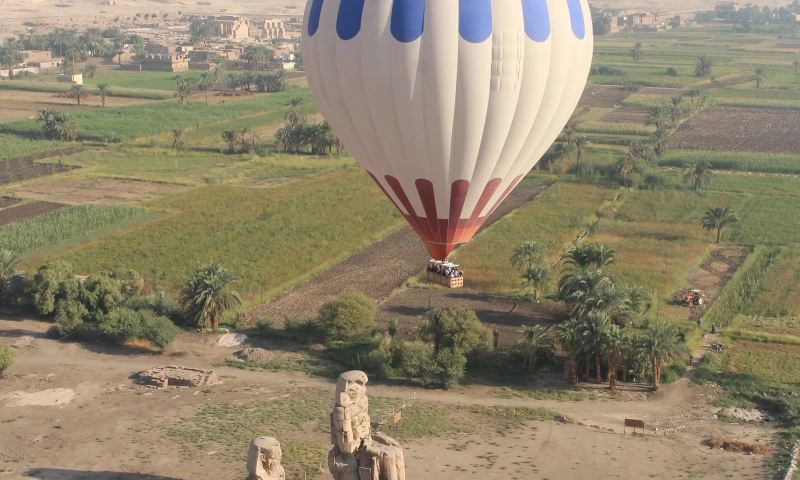
The statues are located on the West Bank, at a roadside stop close to other Theban monuments. A visit fits into a larger day of sightseeing, with most travelers reserving enough time to see the Valley of the Kings, Hatshepsut’s temple at Deir el-Bahari, and Medinet Habu on the same day.
Walking the length of the colossi is an option, or you can enjoy the views from the fence line to see the difference between the throne sides and faces. Since these statues are oriented east, the morning sun strikes their fronts, making them a popular choice for photography. Conditions can change, so double-check the entry rules ahead of your visit.
Timing a trip to coincide with the total solar eclipse of 2 August 2027? Our eclipse in Luxor guide describes this event and its impact on itinerary planning.
If the details feel too fluid, an Egypt travel package can include the West Bank and surrounding sightseeing in a wider planned route.
What Other Attractions Are Worth Seeing Near the Colossi?Qs
Several other major ancient sites are within easy reach from this location. The mortuary temple of Ramesses III at Medinet Habu features well-preserved wall reliefs, and the Ramesseum and Valley of the Kings are both nearby attractions.
For a less crowded alternative to the tombs and temples of the Valley of the Kings and Queens, consider visiting the royal women’s burial ground. Our Valley of the Queens guide describes the Tomb of Nefertari and the experiences that await you on the West Bank.
Travelers with limited time on the Nile or along Egypt’s riverside cities can extend a visit to Luxor with Nile River cruises. River cruises that call at Luxor are one convenient way to see the colossi and the nearby monuments.
FAQs
What are the Colossi of Memnon?
They are two statues of Amenhotep III, made of quartzite and approximately 18 metres in height. They were the entrance to the mortuary temple of Amenhotep III, most of which has disappeared.
Why is the Memnon statue called Memnon?
Ancient Greek visitors heard a sound coming from the northern statue, which they believed to be Memnon, a hero of the Trojan War. The Greek name has since been applied to both statues.
Did the statues really sing?
Ancient writers describe the sound that came from the northern statue after an earthquake in 27 BC. Repairs carried out around AD 199 are traditionally attributed to the loss of sound.
How long should you allow for a visit?
The statues are a short roadside stop on the West Bank. Most travelers combine a visit to these statues with other monuments in a half- or full-day tour.
Which sites combine well with the statues?
Medinet Habu, the Ramesseum, the Valley of the Kings, and Hatshepsut’s temple at Deir el-Bahari are all easily reached from this monument.
