


Introduction
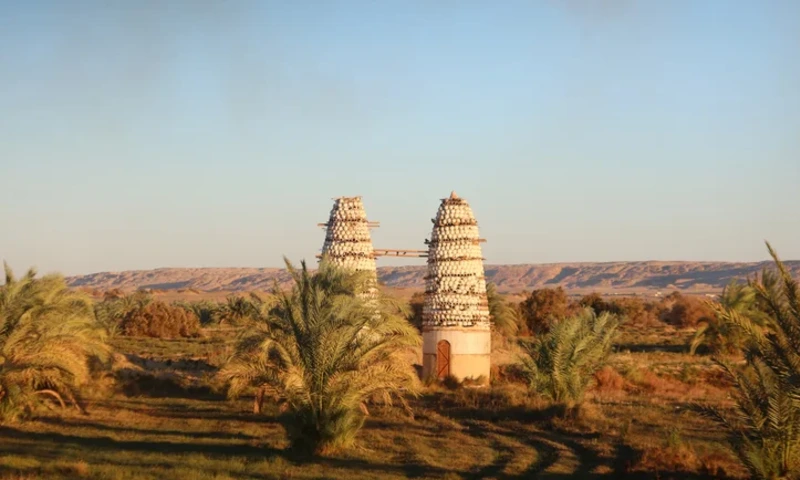
Nestled in the Western Desert Egypt, Bahariya Oasis is around 4 hours from Cairo and the perfect starting point for some of the most unique scenery in the country. Black volcanic hills, quartz ridge, and chalk formations of the White Desert can be found in this area. The oasis also has some archaeological sites that many tourists wouldn’t expect to find so far away from the Nile.
The area has always been an agricultural area, and it is a popular destination for tourists looking for something different from the temples and pyramids. The oasis has palm groves, springs, and some beautiful rugged desert.
This guide will tell you about the town and archaeological sites in Bawiti, the unique desert scenery, and the camping experience in the white rocks. We’ll also look at how it fits in with an Egypt and Jordan Tour.
Table of content:
Where is Bahariya Oasis and how far is it from Cairo?
Bahariya Oasis is around 340- 350 km from Cairo, meaning it is the closest oasis to the capital. This makes it a popular starting point for many desert itineraries. The capital of the oasis, Bawiti, is located on a hillside, with the surrounding depression surrounded by black hills of ferruginous quartzite and dolerite. If you look closely, you will notice the Pyramid Mountain hills.
Many tourists start their journey in Cairo and find out more about visiting the historic bazaar of Khan El-Khalili. Once you have been driving for a while, you will see the green patches of Bawiti. Many tourists will eat lunch in one of the village restaurants, some of which have a great view of the spring.
Once the road reaches the town, your tour will switch to a 4x4. From here, you will start to really explore the surrounding area. The road switches to sand, rock, and open horizons. As you will be using a private vehicle and local drivers who know the roads, you will have a smooth transition.
What can you see in Bawiti & around?
Bawiti is home to many archaeological sites, most notably the Hall of the Golden Mummies. The museum shows off many tombs from a recently discovered cemetery. Many of the mummies are covered in gold, meaning they have gained the name. The cemetery is huge, meaning there must have been a vast community living here. Nearby there are many tombs, including the Bennuti tombs and Qarat Qasr Salim tombs, which show how the people in the oasis would bury their dead. The Temple of Alexander is also a popular site to include in any oasis itinerary.
If you are interested in learning more about the wider burial practices in Egypt, you can compare the Royal Mummies Hall in the National Museum of Egyptian Civilization in Cairo. The royal mummies are in Luxor Museum on the Nile Corniche. Comparing these to the mummies in the oasis will give you a better idea of how the burial practices varied throughout the country and why it is important to study the finds in this remote area.
In the evenings, your hosts will cook you some food and play the simsimeyya (harp-like instrument). This helps connect the archaeology to the present and shows you that this is much more than just ruins.
Why is the landscape in the Western Desert of Egypt so diverse?
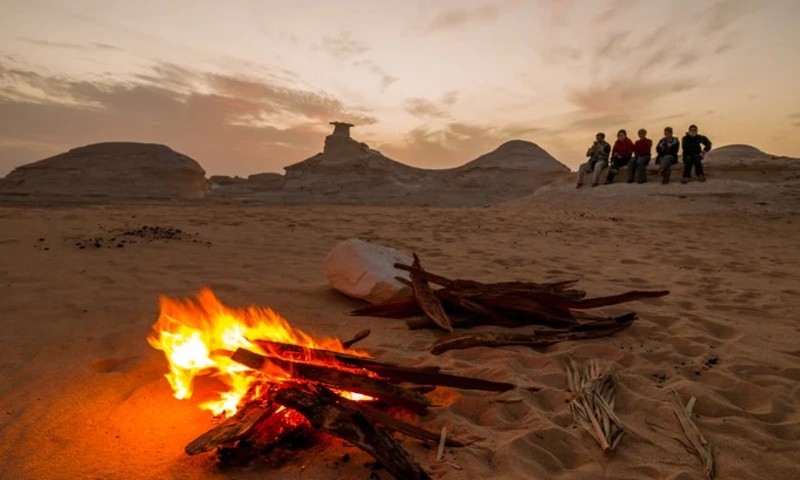
Once you leave the oasis, you will notice the landscape changes every few km. Most tours will start with the Black Desert. This area has many volcanic hills with dark, iron-rich rocks covering the ground like black dust. The iron in the desert is one reason for the dark, rocky appearance. The hills are also cone-shaped, meaning you feel like you are in a whole new world. Al-Marsous Mountain can be found here. This mountain has a crater covered in volcanic jasper. The dark hills contrast against the pale sand.
Next, you will come to Crystal Mountain. This area has a natural ridge covered in quartz. As vehicles drive through this area, you can see the crystals sparkle. This area is sometimes called the Jewel of the Desert by the guides. The hills are covered in crystals, meaning you can see them sparkle. Next, you will travel along the track to Agabat Valley. This area has rolling white hills and golden dunes, showing you how the wind has shaped the landscape over thousands of years. Each stop is completely different, meaning many guides will say you are travelling through many different deserts.
By the afternoon, you will come to the White Desert. This area has a high plateau covered in chalky white limestone. This area is completely different to the previous area, with the black basalt now being pale chalk. Even if you have read about this area, it is surprising to see how different it is. Find out more about the chalky rocks and camping in the White Desert Egypt, with our travel guide. This area connects to the oasis towns further south.
What is it like to camp in the White Desert?
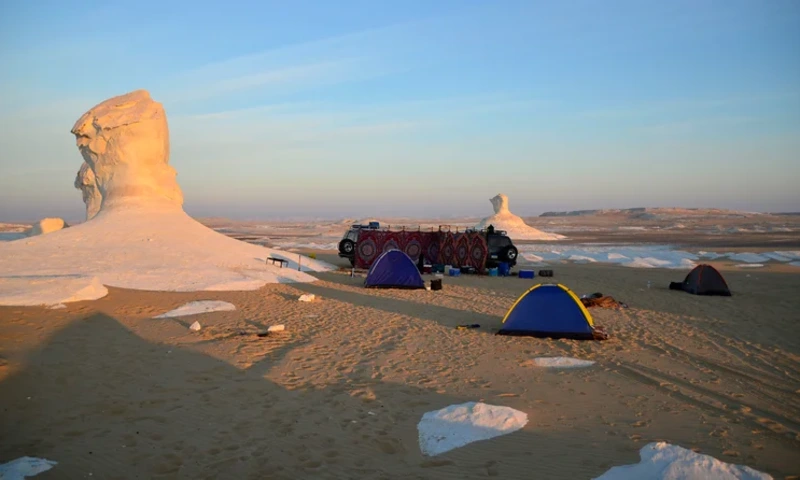
Most itineraries will include some camping in the White Desert. Once the sun sets, your guides will set up a Bedouin-style camp. You will eat your evening meal around a campfire whilst listening to Bedouin music. Once it gets dark, you will have a peaceful evening with the stars above. In the morning, you will have a beautiful sunrise view over the chalky rocks. As there are no lights from the town, you will be mesmerised by the sky above.
As these are only accessible by 4WD vehicles, you will be using private 4x4 vehicles. This means you will have a small group. Your drivers & guides will take care of navigating, setting up the camp, and cooking your meals. This means you can take your time exploring the rocks and watching the colours change. Camping in the rocks will give you a close view of western desert egypt. Most people will remember the peacefulness of the area.
How does Bahariya Oasis fit in with the Western Desert of Egypt?
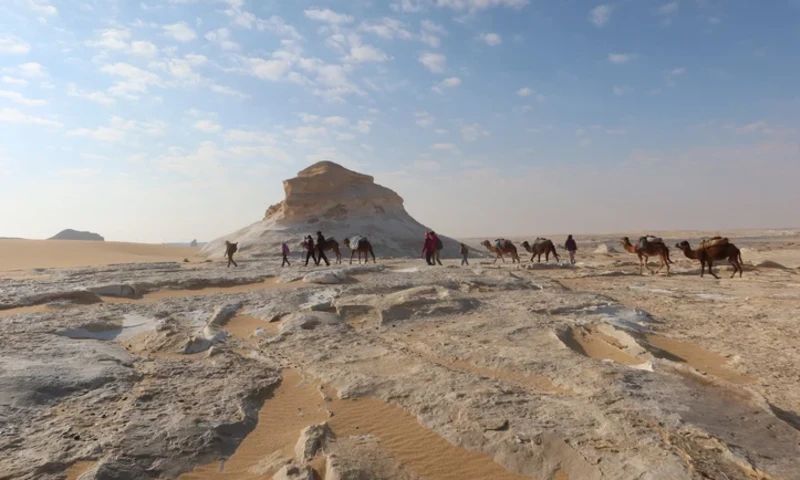
The oasis is often the first stop on a chain of desert towns. Some itineraries will continue to Farafra Oasis. This area has a hot spring (Beer Seta), a Badr folklore museum & old town. This gradual transition between the oasis gives you an insight into how people have lived in this area of the desert. This is why Bahariya is often the first stop. Each area has its own charm, with the springs & tombs in Bawiti and peaceful streets in Farafra.
As a whole, the desert is completely different to the temples lining the Nile Valley. OFT Travel offers Nile River Cruises that travel through Luxor & Aswan. This means you can take your time travelling to the amazing temples. An 8-day Egypt travel package includes a Nile Cruise & Cairo tour. This means you can enjoy the sights of Cairo, the Giza Pyramids & the Grand Egyptian Museum. You will also enjoy a 5-star Nile Cruise.
FAQs
How long does it take to get to Bahariya Oasis from Cairo?
It takes around 4 hours to get there. This is around 340- 350 km. As it is the closest oasis to Cairo, it is often the first stop on many desert itineraries. Most tours will switch to a 4x4 once reaching Bawiti.
What is the Hall of the Golden Mummies?
This is a museum in Bawiti showing off many mummies from a cemetery found in the oasis. Many of the tombs are covered in gold, meaning it has gained the name. There are also tombs nearby in Qarat Qasr Salim.
Do you need a 4x4 to get to the White Desert?
Yes. As it is on desert tracks, you will need a 4WD vehicle. Large tour buses cannot navigate these tracks. Most tours will switch to a 4x4 once reaching Bawiti. The drivers will be experienced.
Where do you stay in the White Desert?
You will stay in a Bedouin-style camp in the chalky rocks. You will eat your evening meal around a campfire with Bedouin music. In the morning, you will enjoy breakfast with a beautiful sunrise. You will enjoy a peaceful night in the middle of the desert.
