


Introduction
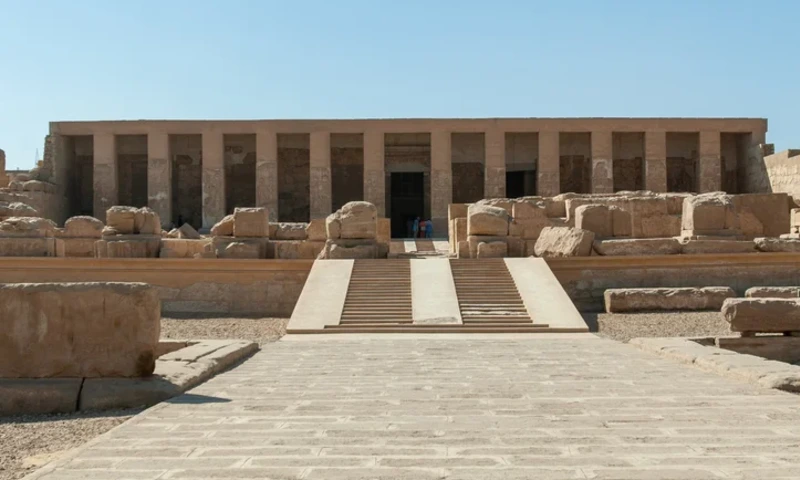
The Abydos Temple is located on the western side of the Nile in Upper Egypt. This temple was built by Seti I and completed by his son Ramesses II as a memorial to the god Osiris (god of the afterlife), who was worshipped by the ancient Egyptians. The main structure has beautifully restored painted reliefs on the walls with 7 sanctuaries. There are also many ancient kings listed and a mysterious underground structure.
The Temple of Seti I is from the New Kingdom, 19th Dynasty, and was known to the ancient Egyptians as the Mansion of Millions of Years. Seti I did not live to see the completion of the temple. Ramesses II completed the temple. This is why there are two different types of reliefs on the walls. The reliefs were raised by Seti I and sunk by his son Ramesses II. If you are looking for more than one stop in Upper Egypt, then check out our Egypt travel packages for a tour that includes Luxor and surrounding sites.
Table of content:
Who built the Abydos Temple?
The Abydos Temple was built by Seti I (the second king of the 19th Dynasty and father of Ramesses II). Seti I had this temple built as a memorial to himself and as a home for the gods. Seti I ruled from around 1290-1279 BC and did not live to see the completion of the temple. This is why Ramesses II completed the temple. This is why there are 2 different types of carvings on the temple. Raised reliefs from Seti I and sunk reliefs from Ramesses II.
Most scholars believe that the best art is from Seti I’s time. Ramesses II added his own scenes to the outside courts. This makes the temple tell the story of both kings.
Later builders in Egypt added scenes to their sanctuaries. See the double temple in our Kom Ombo Temple guide. This shows how the temples have evolved over the years.
Many of these temples (such as Edfu and Kom Ombo) are part of Nile river cruises.
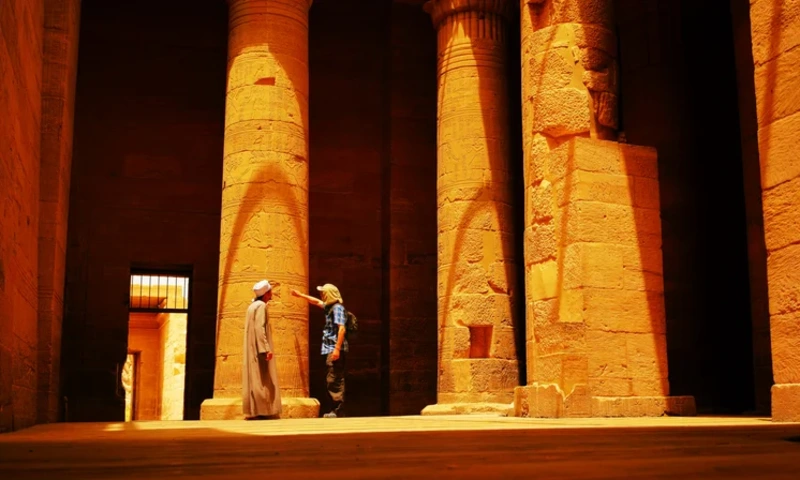
Why was this place so important to the ancient Egyptians?
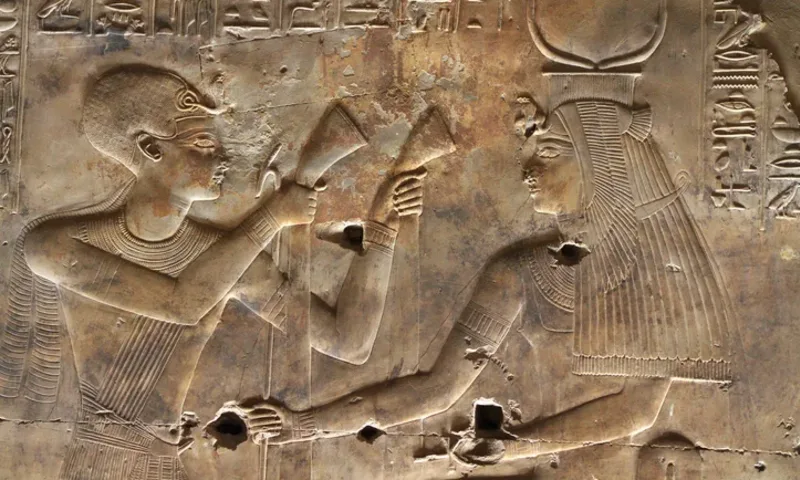
Abydos was the cult centre for Osiris (god of the afterlife and resurrection). Pilgrims would come here to worship. Inside the temple, there is an Osiris chapel, and Seti I is pictured making offerings and performing ceremonies. It was very important to the Egyptians, as it was a link between the living king and the gods.
The construction of this temple by Seti I was a return to traditional worship. This is emphasised by the 7 sanctuaries and the king list. When read by a guide, the walls become a statement about kingship and eternal life.
While inside the Abydos Temple, you can learn the stories of 2 Pharaohs, 7 gods and 76 ancient kings. If you are looking to plan a longer journey through Egypt, then take a look at our multi country tours.
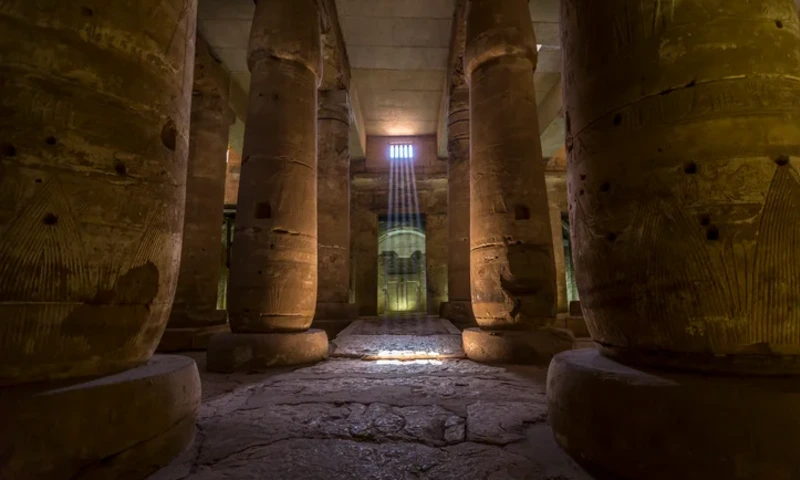
What to expect inside the courts and halls?
Courts and Entrance
There is a mostly ruined pylon at the front. There are 2 open courts. These were decorated by Ramesses II with scenes from the Battle of Qadesh and scenes of the king making offerings to the gods. There is a ramp leading to the second court where the king is depicted with the gods. This leads up to a staircase to take you up to the raised terrace with the covered section.
Hypostyle Halls
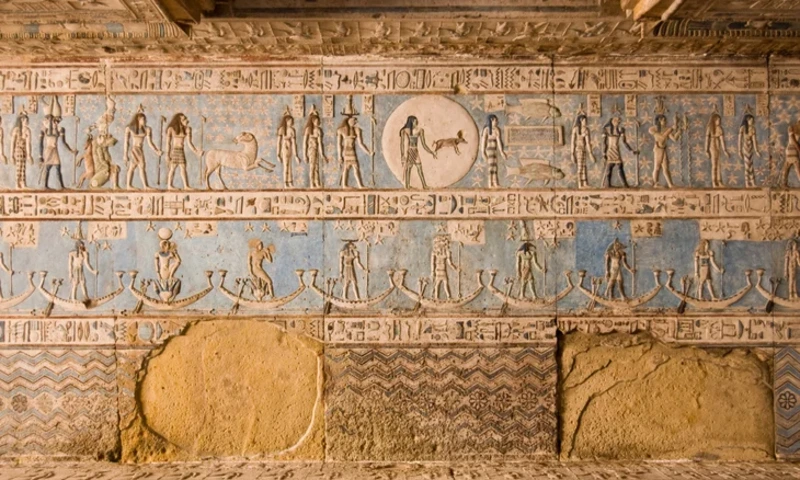
Inside the temple there are 2 hypostyle halls. The first has columns and reliefs that were carved by Ramesses II. The second hall is a true reflection of Seti I’s vision. The ceilings have reliefs depicting sacred rituals to the main gods. Many of the details are still brightly coloured and worth taking your time to look at the details between the columns.
Seven Sanctuaries
After the halls, there are 7 sanctuaries. Each one is dedicated to a different god. Osiris, Isis, Horus, Amun-Ra, Ra-Horakhty, Ptah, and Seti I (deified). The temple is in the shape of an L because Seti I died, and the temple was completed by Ramesses II. One wing leads to the Gallery of the Ancestors.
What are the Abydos King List and the Osireion?
One of the few sections of wall that are really popular in the Temple of Seti I is the Gallery of the Ancestors. Seti I and Ramesses II are depicted making offerings to 76 previous Pharaohs. This is an extremely important document to Egyptologists as it helps them to date and identify the different rulers and tombs in Egypt.
However, there are some missing names. Pharaohs such as Hatshepsut and Akhenaten are not included. This shows which kings Seti I recognised as legitimate. If you want to learn more about the rulers of Egypt, then the Royal Mummies Hall at the National Museum of Egyptian Civilization in Cairo is a great place to visit.
Osireion
Behind the temple is the Osireion. This is a unique structure that is linked to Osiris. This is a mystery to Egyptologists. It gives a more peaceful and mysterious ending to your visit after visiting the sanctuaries.
What else should you know before visiting?
The Abydos Temple is located on the western side of the Nile, just north of Luxor. It is often visited as a day trip. A guide will help you to understand the reliefs and king list. The large halls and courts are best explored at a leisurely pace. The smaller temple of Ramesses II is nearby. This has scenes on the outside to celebrate his achievements. The lower sections are intact.
The Luxor Museum in Luxor will give you an insight into more statues, royal mummies, and the Wall of Akhenaten. This will give you more background knowledge on the kings mentioned on the walls.
The painted tombs in the Valley of the Queens (such as the tomb of Nefertari) will give you an insight into how the Egyptians decorated their tombs. This will make the religious themes easier to follow.
FAQs
Where is the Abydos Temple?
The temple complex is located on the western side of the Nile in Upper Egypt. It is often visited as a day trip from Luxor.
Who is the Temple of Seti I dedicated to?
The temple is dedicated to 7 gods. Osiris, Isis, Horus, Amun-Ra, Ra-Horakhty, Ptah, and Seti I (deified). Abydos was the cult centre for Osiris, so he is very prominent in the decorations.
What is the Abydos King List?
This is a relief in the Gallery of the Ancestors. Seti I and Ramesses II are depicted making offerings to 76 previous kings. This is an important document for Egyptologists to help them date and identify the rulers. However, some kings are not included (such as Hatshepsut and Akhenaten).
Who completed the temple?
The temple was completed by Seti I’s son, Ramesses II. The outside courts and first hall were decorated by him. This is why there are sunk reliefs instead of raised reliefs like his father.
What is the Osireion?
The Osireion is a structure located directly behind the temple. It is linked to Osiris. This is a unique structure, as there is nothing quite like it anywhere else in Egypt. Egyptologists are still debating what it was used for.
