


Introduction
On Luxor's west bank, the Valley of the Kings holds the rock-cut tombs of rulers and other important figures from Egypt's New Kingdom. Known in antiquity as the Great Place, the valley served as a royal burial ground for nearly 500 years, particularly during the 18th, 19th and 20th Dynasties.
The site forms part of Ancient Thebes with its Necropolis, inscribed on the UNESCO World Heritage List in 1979. Within this wider Theban landscape, temples and settlements occupied areas around the west bank while royal tombs were cut deep into the limestone hills.
More than 60 tombs have been identified in the valley, ranging from relatively simple chambers to extensive burial complexes. Their architecture, wall decoration and funerary texts offer an unusually detailed record of ancient Egyptian beliefs about death, rebirth and the king's journey into the afterlife.
Table of content:
What Are the Most Important Valley of the Kings Facts?
Among the essential Valley of the Kings facts is that the necropolis did not serve every period of ancient Egyptian history. Its royal burials belong primarily to the New Kingdom, when pharaohs moved away from the pyramid tradition associated with earlier rulers and placed their tombs within the western mountains of Thebes.
The valley is divided into two main branches: the East Valley, where most of the known royal tombs are located, and the West Valley. Tombs are generally identified by the letters KV, meaning King's Valley, followed by a number. Tutankhamun's burial, for example, is KV62.
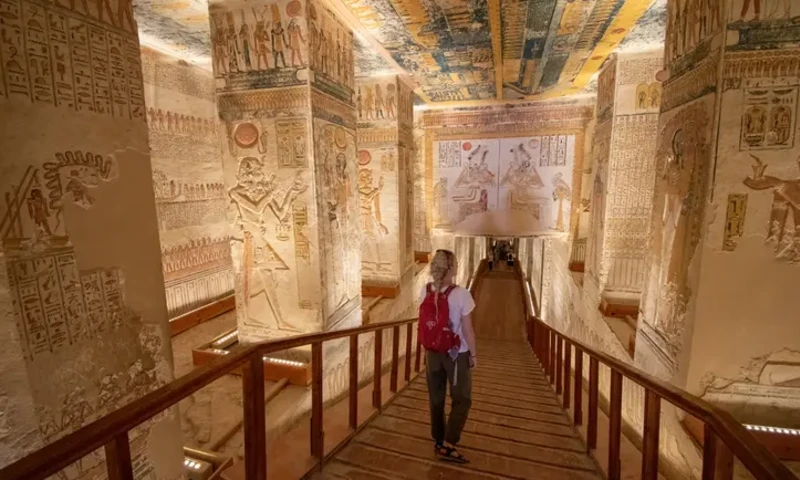
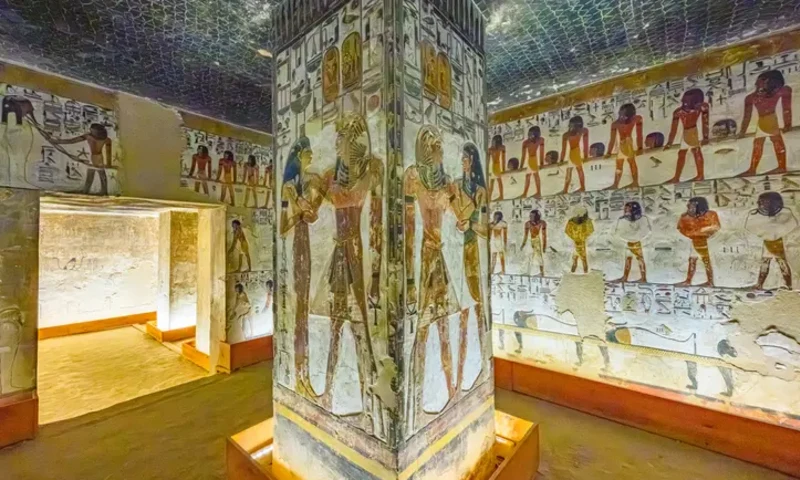
Decoration inside the royal tombs was closely connected to ancient Egyptian funerary beliefs. Walls and ceilings carry religious compositions intended to assist the deceased king through the underworld and toward rebirth, including texts and scenes from works such as the Amduat and the Book of Gates.
The necropolis also forms part of a larger west-bank landscape. Nearby archaeological sites include the Valley of the Queens, Deir el-Medina and the memorial temples of New Kingdom rulers, making the area central to understanding ancient Thebes rather than an isolated collection of tombs.

Which Tombs Define the Valley of the Kings?
No single tomb represents the entire Valley of the Kings. Burial plans and decoration changed across the New Kingdom, and differences between tombs reveal shifts in royal funerary architecture, religious texts and artistic conventions.
Several burials are especially useful for understanding that development, from Tutankhamun's compact tomb to the much larger complexes created for rulers such as Seti I and Ramesses III.
Tomb of Tutankhamun
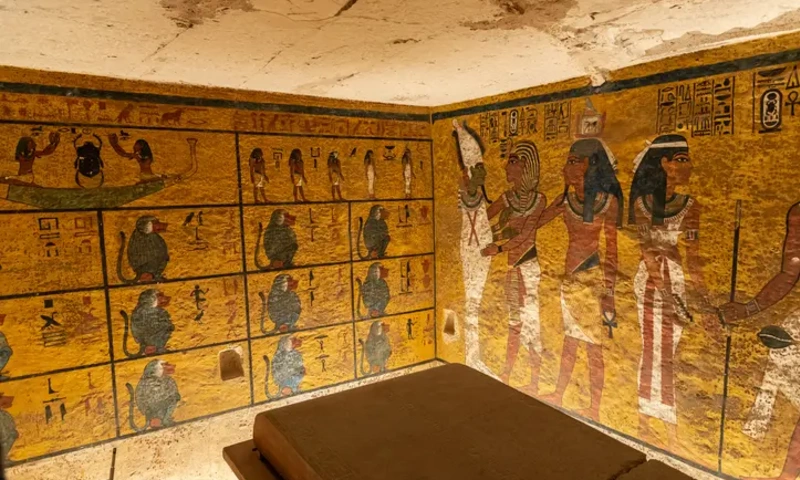
Tutankhamun's tomb, KV62, became the best-known burial in the valley after Howard Carter uncovered it in 1922. The tomb had survived with much of its burial equipment still present, providing archaeologists with an extraordinary body of material associated with an Egyptian royal burial.
The tomb itself is comparatively small. Tutankhamun died young, and the modest scale of his burial chambers contrasts with the fame generated by the objects found inside. His mummy remains in the tomb, while objects from the burial have been preserved in Egyptian museum collections.
Tomb of Seti I
Seti I's tomb, KV17, is among the longest and most extensively decorated royal tombs in the valley. Its corridors and chambers extend deep into the rock, with walls carrying elaborate religious scenes and texts connected with the king's passage through the afterlife.
The tomb is particularly significant for the range and quality of its decoration. Its chambers demonstrate how architecture and religious imagery could work together to create a symbolic route through the underworld.
Tomb of Ramesses III
KV11, the tomb of Ramesses III, is another substantial royal burial. Its decorated corridors contain religious compositions as well as scenes that provide insight into objects, activities and provisions associated with royal funerary beliefs.
Construction history is visible within the architecture itself. Work on the tomb had initially begun for Setnakhte before being abandoned and later adapted for Ramesses III, illustrating how practical circumstances could affect even royal burial projects.
Tombs of Other New Kingdom Rulers
The valley contains tombs associated with many rulers of the 18th, 19th and 20th Dynasties, including Thutmose III, Amenhotep II, Horemheb and several kings named Ramesses. Their different layouts and decorative programs allow visitors to compare changing approaches to royal burial across several centuries.
Not every tomb is accessible at the same time. Conservation requirements and visitor management can affect which burials are open, so current official information is more reliable than building a visit around a fixed list from an older guide.
Why Was the Valley Chosen for Royal Burials?
The Valley of the Kings lies within the desert mountains west of the Nile, opposite the ancient city of Thebes. In ancient Egyptian religious thought, the west was closely associated with death and the setting sun, making the Theban west bank an important funerary landscape.
Unlike the monumental pyramids of earlier periods, New Kingdom royal tombs were excavated directly into the rock. Long corridors could lead through a sequence of chambers toward the burial chamber, with the arrangement becoming more elaborate in some tombs.
Teams of specialist workers were responsible for creating these royal burials. Many lived at nearby Deir el-Medina, a settlement established for the craftsmen who worked on tombs in the Theban necropolis. Archaeological evidence from the village has provided extensive information about the people whose labor and skill produced the decorated royal tombs.
This wider setting is important when planning time in Luxor. Pairing the royal necropolis with a guide to Karnak Temple helps place the west-bank burial landscape alongside the major religious center of Amun on the east bank, while a broader Luxor guide can connect both sides of ancient Thebes.
How Should You Plan a Visit to the Valley of the Kings?
A visit is best approached as more than a race between famous tombs. Each burial has its own plan and decorative program, and spending time looking at the painted walls, ceilings, corridors and chambers makes the differences between individual reigns easier to understand.
Access arrangements deserve attention when planning. The selection of open tombs can change, while some burials may have separate access conditions. Check the latest official information before traveling to confirm which tombs can be entered during your visit.
The archaeological terrain and movement between entrances also make comfortable footwear practical. Inside the tombs, visitors should respect current rules governing photography and access because conservation measures are intended to protect ancient painted surfaces.
Travelers exploring Upper Egypt can place Luxor within a longer route by comparing Nile River cruises between Luxor and Aswan or Egypt travel packages that combine Cairo with the archaeological sites of the Nile Valley.
FAQs
What is the Valley of the Kings?
The Valley of the Kings is a royal necropolis on the west bank of the Nile at Luxor, used primarily during Egypt's New Kingdom. More than 60 tombs have been identified there, including burials created for pharaohs and other important individuals.
Why is Tutankhamun's tomb important?
Tutankhamun's tomb, KV62, was uncovered by Howard Carter in 1922 with much of its burial equipment still present. The find provided an exceptional collection of objects associated with a New Kingdom royal burial.
What are useful Valley of the Kings facts before visiting?
Useful Valley of the Kings facts include that the site contains more than 60 known tombs, most royal burials are in the East Valley, and tombs are identified by KV numbers. Access to individual tombs can vary, so current visitor information should be checked before arrival.
Who was buried in the Valley of the Kings?
The necropolis contains tombs associated with New Kingdom rulers including Tutankhamun, Seti I, Ramesses III, Thutmose III and other pharaohs of the 18th, 19th and 20th Dynasties. Some non-royal individuals were also buried within the valley.
Is the Valley of the Kings a UNESCO World Heritage Site?
The valley forms part of Ancient Thebes with its Necropolis, which UNESCO inscribed on the World Heritage List in 1979. The property includes major archaeological remains on both the east and west banks of the Nile at Luxor.
