


Introduction
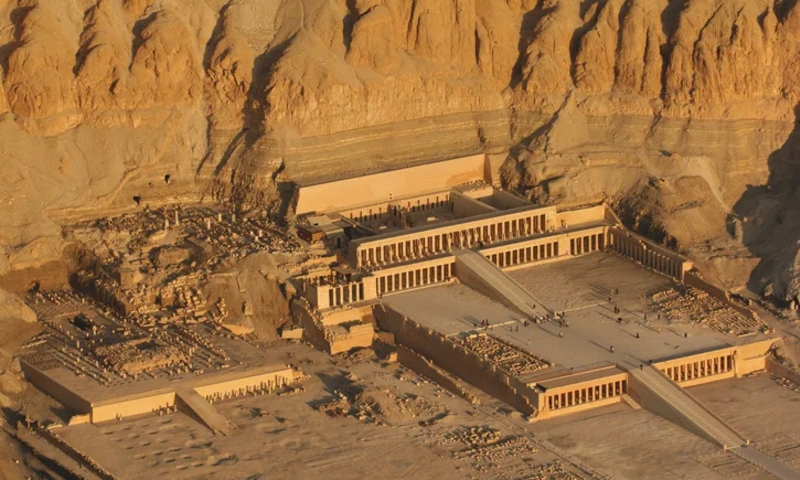
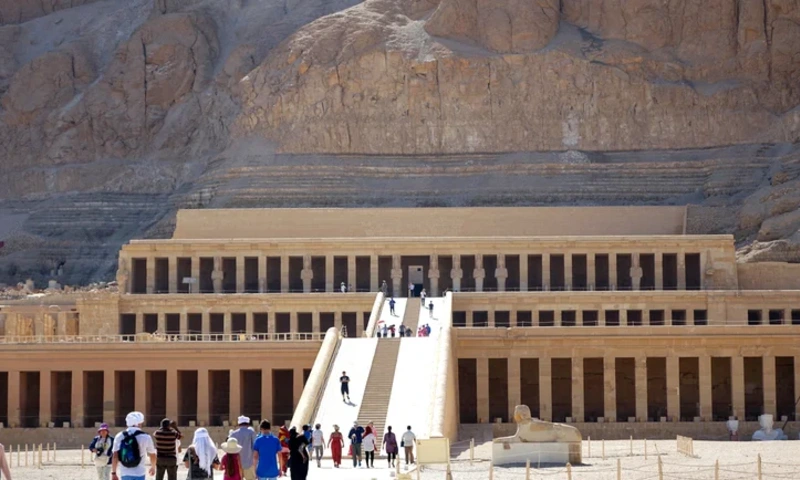
Most Egyptian temples sit low and heavy on the ground. The Hatshepsut mortuary temple does the opposite. It climbs a wall of limestone cliffs on Luxor's west bank in three wide terraces, and it was built for one of the few women who ruled Egypt as pharaoh.
Plenty of visitors squeeze it into a morning, usually before or after the Valley of the Kings. That works, but it helps to know what you're looking at. Below you'll find who built it, what each level holds, and how to plan the day. If your trip also covers the east bank, our Luxor Temple visitor guide is a natural next read.
Table of content:
- What Are the Main Highlights of the Visit?
- Who Was Hatshepsut, and Why Did She Build Here?
- How Did Hatshepsut Become Pharaoh?
- What Makes the Hatshepsut Mortuary Temple Different From Other Egyptian Temples?
- What Happened to the Temple After Hatshepsut's Reign?
- Where Is the Deir el-Bahari Temple, and How Do You Plan a Visit?
- What Else Can You See Nearby on the West Bank?
- FAQs
What Are the Main Highlights of the Visit?
Six things stand out:
-
Three colonnaded terraces joined by long central ramps
-
Painted reliefs recording the expedition to the land of Punt
-
Scenes of Hatshepsut's divine birth on the middle terrace
-
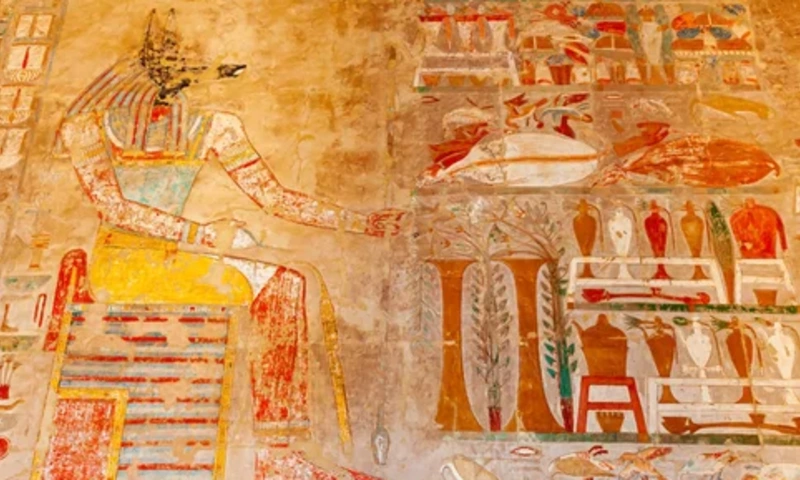
Chapels dedicated to Hathor and Anubis
-
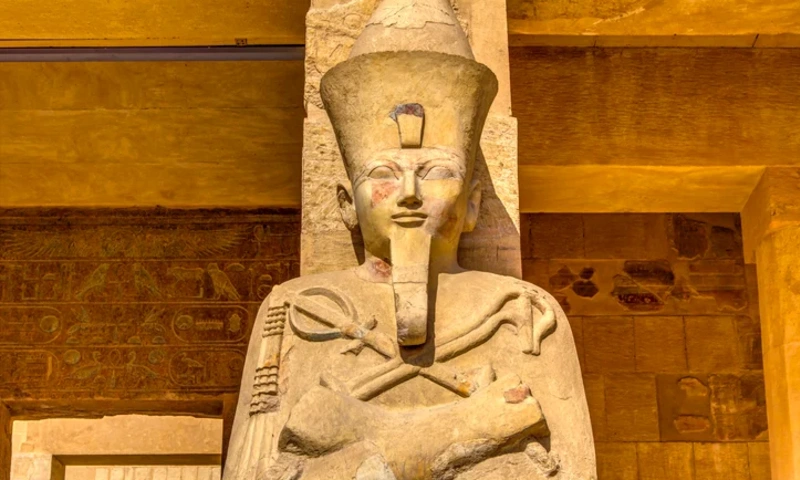
Osiris-style statues of the queen on the upper terrace
-
A cliffside setting, right beside the older temple of Mentuhotep II
Planning more than one stop? An Egypt travel package can fold Luxor into a wider route.
Who Was Hatshepsut, and Why Did She Build Here?
Hatshepsut ruled during Egypt's 18th Dynasty. Her steward, Senenmut, is credited with the design. Like other royal mortuary temples, the Hatshepsut mortuary temple gave a ruler a place for offerings and rituals after death, and it was tied to the worship of the god Amun as well. The location wasn't random. A Middle Kingdom temple, built for Mentuhotep II, already stood in the same curve of cliffs, and its architects seem to have borrowed its terraced plan and scaled it up.
Gods fill the walls here. If Amun, Hathor, and Anubis don't mean much to you yet, our Egyptian mythology travel guide sorts out who's who and where their stories turn up in temples and tombs.
How Did Hatshepsut Become Pharaoh?
She began as the wife of Thutmose II. After he died, she governed as regent for his young son, Thutmose III. Then she took the throne herself. That was an unusual step, and she seems to have known it. Her statues and reliefs show her in the dress and poses used for a male king, and the temple's imagery, from the birth scenes to the Punt expedition, helped make the case for her right to rule.
What Makes the Hatshepsut Mortuary Temple Different From Other Egyptian Temples?
Open space. Many temples wrap you in columns and shadow, but this one faces outward, toward the cliffs and the plain below. The difference shows as soon as you start up the first ramp.
The Three Terraces and Their Ramps
Long ramps connect the lower courtyard to the middle and upper levels, and colonnades frame each terrace. Look at how the Hatshepsut mortuary temple repeats the vertical lines of the rock behind it. The building seems to grow out of the cliff instead of standing in front of it.
Reliefs of the Punt Expedition
Head to the middle terrace for these. The carvings follow a trading expedition to Punt: ships being loaded, incense trees carried home to Egypt, every step recorded in careful detail.
The Chapels of Hathor and Anubis
Two chapels share this level. Hathor's has columns carved with the goddess's face. The Anubis chapel still holds traces of its original color.
The Birth Scenes and the Upper Terrace
Reliefs of divine birth show Hatshepsut as the child of Amun, a claim that backed up her rule. Higher up, the upper terrace holds Osiris-style statues of the queen and a sanctuary cut straight into the cliff.
What Happened to the Temple After Hatshepsut's Reign?
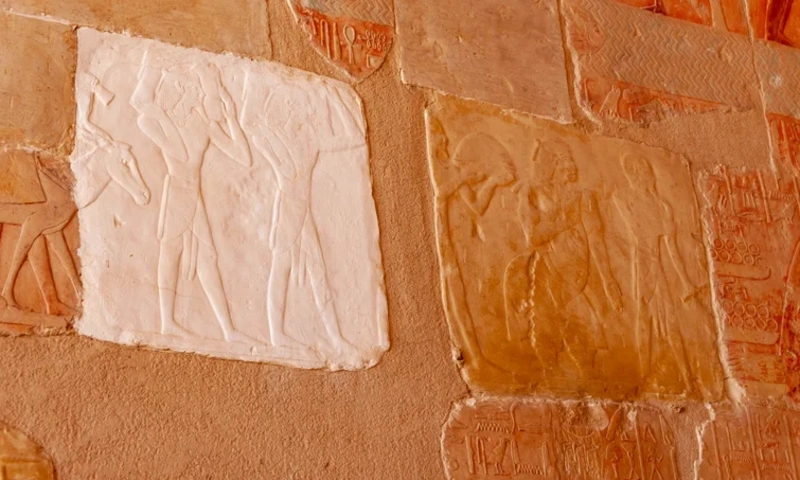
Her story didn't end well on the walls. After her reign, many images of the queen were chiseled away, and you can still spot the damage on some reliefs and statues.
The modern name tells part of the later story. Deir el-Bahari means "Monastery of the North," after a Christian monastery built among the ruins centuries afterward. Excavation and restoration since the nineteenth century have brought much of the temple back into view.
Where Is the Deir el-Bahari Temple, and How Do You Plan a Visit?
Location and Getting There
Deir el-Bahari sits on the Nile's west bank, across the river from Luxor's main town. The Deir el-Bahari temple is one piece of the larger Theban necropolis, which is why most tours pair it with the Valley of the Kings and other West Bank sites.
Egypt might be just one leg of a bigger trip. In that case, our multi-country tours can link it with other destinations.
Best Time to Visit
There's little shade, because the whole site is open-air. Most people find it easier early in the day, when tour groups are thinner. For help with the season, our best time to visit Egypt guide breaks the year down.
What to Wear and Bring
Wear comfortable shoes, since you'll be on ramps and uneven ground. A sun hat, sunscreen, and a bottle of water are worth carrying, and modest clothing is the right choice here.
The climb to the top terrace is longer than the lower levels. If mobility is a concern, ask your guide about the best route before you start. Opening hours and ticket arrangements change from time to time, so confirm them before you go.
Museum fans can add the Grand Egyptian Museum guide to their reading list for another look at ancient Egyptian artifacts
What Else Can You See Nearby on the West Bank?
The Valley of the Kings lies just over the ridge, so the two sites are easy to combine. Also on the west bank: the Colossi of Memnon, a pair of seated statues of Amenhotep III, and the temple complex at Medinet Habu. Give the Hatshepsut mortuary temple a proper slot in your itinerary, not a rushed half hour. Our Nile river cruises show how a West Bank visit can fit into a trip between Luxor and Aswan.
FAQs
Where is the Hatshepsut mortuary temple located?
On the west bank of the Nile at Deir el-Bahari, across the river from Luxor's main town. It sits at the foot of the Theban cliffs, and visitors usually see it on the same day as other west bank sites.
Why is the Deir el-Bahari temple known for its terraces?
Three colonnaded levels, joined by ramps, rise straight up against the cliff face. The monument was built for Hatshepsut, and Senenmut is credited as its architect.
What can you see inside the temple?
The Punt reliefs, the divine birth scenes, and the chapels of Hathor and Anubis are the main draws. Up top, you'll find Osiris-style statues of the queen and a sanctuary cut into the rock.
What should you wear to visit?
Modest clothing and comfortable shoes are the sensible choice for the ramps. Add a sun hat, sunscreen, and water, since the site is open-air with limited shade.
Can you visit Hatshepsut’s temple with other Luxor attractions?
Yes. It is easy to combine the Hatshepsut mortuary temple with nearby West Bank sites, including the Valley of the Kings, Medinet Habu, and the Colossi of Memnon. Checking opening hours and planning your route in advance can help you make the most of your visit.
