


Introduction
A Nile cruise offers a practical way to travel through Upper Egypt while linking several of its major archaeological sites in one route. Most cruises operate between Luxor and Aswan in either direction, combining time aboard with scheduled visits to temples and ancient sites along the river. Egypt's official tourism authority notes that itineraries commonly include Luxor, Edfu, Kom Ombo and Aswan, though the exact program depends on the cruise selected.
The river is part of the experience rather than simply transportation between stops. Sailing connects the monuments geographically, showing how settlements and temples developed along the Nile corridor. For travelers planning several days in Upper Egypt, cruising can bring accommodation, river travel and sightseeing into one structured itinerary.
Table of content:
Why Take a Nile Cruise Between Luxor and Aswan?
Luxor and Aswan anchor the principal cruising route through Upper Egypt. Most cruise ships travel between the two cities, with journeys available in both directions and stops at major archaeological sites along the way. The Egyptian Tourism Authority describes cruises on this route as commonly lasting several nights, although duration varies by vessel and itinerary.
Luxor provides access to the monumental remains of ancient Thebes. On the east bank, Karnak and Luxor temples represent the city's religious landscape, while the west bank contains the Valley of the Kings and other parts of the Theban necropolis.
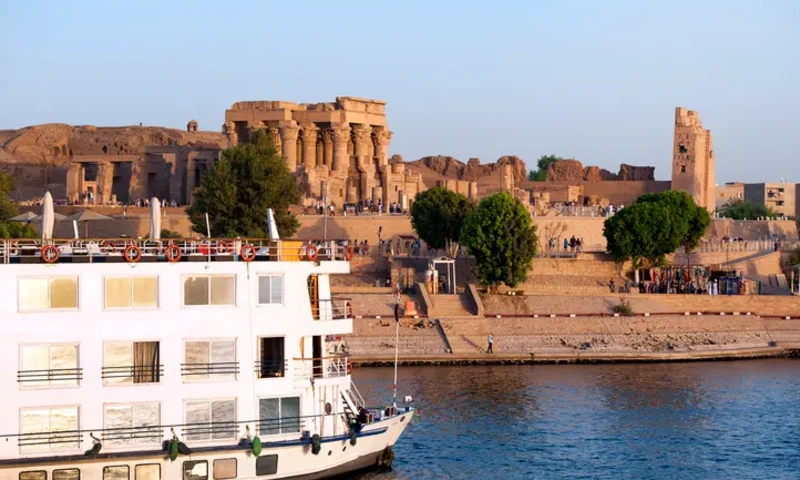
Farther south, Edfu and Kom Ombo provide natural archaeological stops between the two cities. Edfu's Temple of Horus is a major Ptolemaic temple, while Kom Ombo's unusual double temple was dedicated to Sobek and Harwer, a form of Horus.
Aswan changes the character of the route again. Its archaeological landscape includes Elephantine Island and Philae, whose temple complex was transferred to Agilkia Island as part of the international effort to protect Nubian monuments affected by the construction of the Aswan High Dam.
What Will You See When You Sail the Nile?
To sail the Nile between Luxor and Aswan is to move through a sequence of archaeological regions rather than travel between two isolated cities. Exact excursions differ between cruise programs, but several places appear frequently on itineraries.
Luxor and Ancient Thebes
Luxor contains archaeological sites on both banks of the river. Karnak and Luxor temples stand on the east bank, while the west bank leads into the funerary landscape of ancient Thebes, including the Valley of the Kings.
For travelers interested in the details behind these sites, a Karnak Temple guide can provide context for the sanctuary's development, while a Valley of the Kings guide explains the New Kingdom royal necropolis across the river.
Cruise schedules determine which Luxor monuments are included, so the individual itinerary should always be checked rather than assuming every sailing covers the same sites.
Edfu and the Temple of Horus
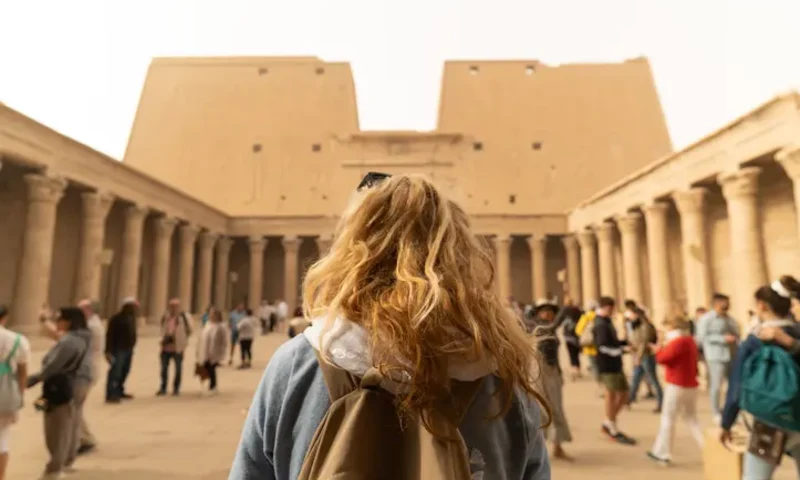
Edfu lies between Luxor and Aswan and is a regular stop on many river itineraries. Its Temple of Horus was completed during the Ptolemaic period and is among Egypt's best-preserved ancient temples.
The temple's monumental pylon leads into a sequence of courts, halls and sacred spaces. Reliefs throughout the complex provide important evidence for temple ritual and religious traditions during the Ptolemaic era.
Kom Ombo and Its Double Temple
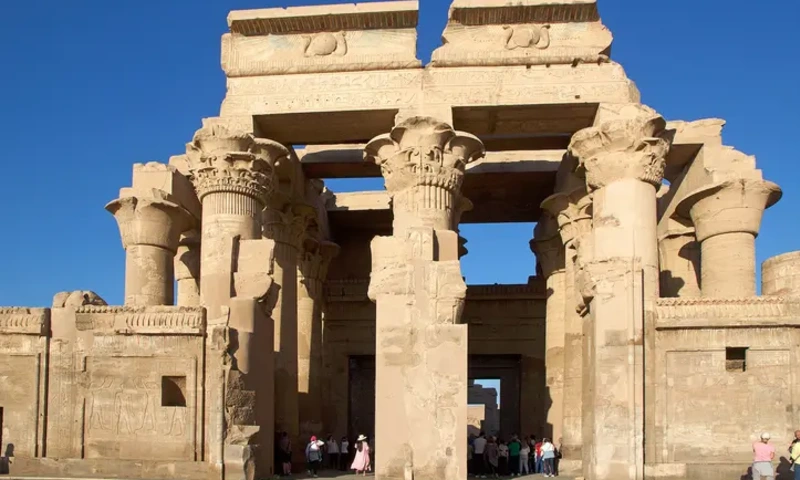
Kom Ombo introduces a different temple plan. The complex is dedicated to two deities—Sobek, associated with the crocodile, and Harwer, a form of the falcon god Horus—and its architecture follows two parallel axes leading toward neighboring sanctuaries.
Its location beside the river also makes the temple closely associated with the Nile cruising route. Depending on the itinerary, passengers can visit Kom Ombo while traveling between Aswan and Edfu.
Aswan and Philae
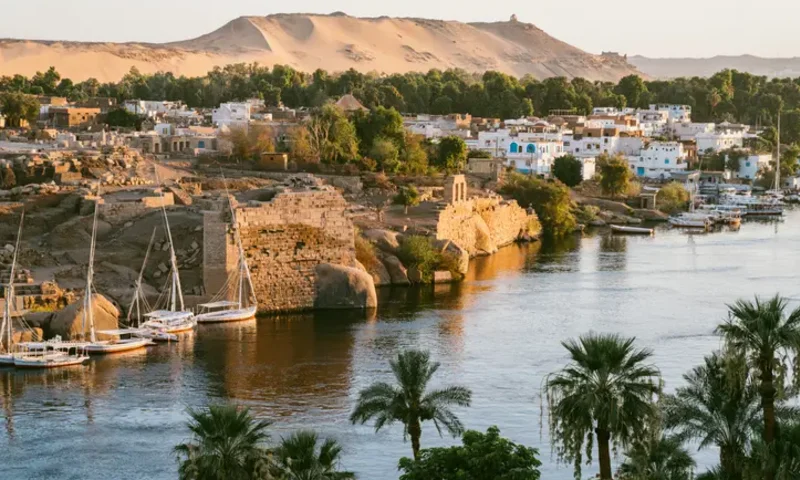
At the southern end of many cruises, Aswan brings together archaeological sites, Nile islands and the historical connection between Egypt and Nubia. Elephantine Island preserves evidence of an ancient settlement as well as temples associated with Khnum and Satet.
Philae is reached by boat on its present location at Agilkia Island. The monuments were dismantled and transferred from their original island during the international campaign to protect Nubian heritage threatened by rising waters following the construction of the High Dam.
Travelers continuing their research can use an Aswan travel guide to place these sites within the wider history of southern Egypt.
What Types of Nile Cruise Can You Choose?
A conventional cruise ship is only one way to travel this stretch of the river. Egypt's tourism authority distinguishes between classic cruise vessels and dahabeyas, traditional-style sailing boats that offer a different form of river travel.
Classic cruise itineraries commonly combine accommodation and meals aboard with scheduled excursions. Specific facilities, cabin categories, dining arrangements and included services vary between vessels, so these should be compared on the individual cruise page rather than treated as standard across every ship.
A dahabeya is a smaller, two-masted sailing vessel. These boats travel between Luxor and Aswan and, because of their size and sailing style, can follow itineraries that differ from those of larger cruise ships.
Feluccas provide another form of Nile sailing, but they should not be confused with conventional multi-night cruise ships. These traditional sailing boats are used for shorter trips and, in some cases, longer journeys on sections of the Nile.
Lake Nasser cruises are also distinct from the standard Luxor–Aswan route. They operate south of Aswan and can connect visits to Nubian monuments, including Abu Simbel, depending on the itinerary.
How Should You Choose a Nile Cruise?
Start with the route. A Nile cruise may operate from Luxor to Aswan or from Aswan to Luxor, and the direction can affect how the trip fits with flights, hotels and other parts of an Egypt itinerary.
Duration comes next. Rather than choosing solely by the number of nights, read the day-by-day schedule and see how time is divided between sailing, excursions and time aboard. Two cruises of similar length may organize their sightseeing differently.
The vessel deserves the same attention. Review the cabin or suite category, meal plan and onboard facilities listed for the specific ship. If guided sightseeing is included, check which sites appear in the program and whether transportation and entrance arrangements are specified.
Travelers who want to sail the Nile as part of a broader trip can also compare the cruise dates with time in Cairo or other Egyptian destinations. OFT Travel's Nile River cruises collection can be used to compare individual routes and vessels before selecting an itinerary.
FAQs
What is a Nile cruise?
A Nile cruise is a river journey that commonly connects Luxor and Aswan while combining accommodation aboard with scheduled sightseeing. Routes often include archaeological stops such as Edfu and Kom Ombo, though exact programs vary.
Where do Nile cruises start and finish?
Most Upper Egypt cruise itineraries operate between Luxor and Aswan in either direction. The embarkation city should be checked before booking because it affects how the cruise connects with the rest of your itinerary.
What sites can you visit during a Nile cruise?
Common itineraries can include sites in Luxor and Aswan as well as the temples at Edfu and Kom Ombo. The exact selection depends on the cruise program, so review the daily itinerary before booking.
What is the difference between a Nile cruise and a dahabeya?
Classic cruises generally use larger motorized vessels, while a dahabeya is a smaller two-masted sailing boat. Dahabeyas also operate between Luxor and Aswan and can make different stops because of their smaller size.
What should I know before I sail the Nile?
Before you sail the Nile, check the route direction, duration, vessel, cabin category, included meals and scheduled excursions. Comparing the complete itinerary also helps you coordinate the cruise with hotels, flights and other destinations in Egypt.
