


Introduction
Luxor city Egypt occupies one of the most important archaeological landscapes in the country. Set on both sides of the Nile in Upper Egypt, modern Luxor stands within the area of ancient Thebes, once a major center of political and religious life in ancient Egypt. Its surviving monuments include vast temple complexes on the East Bank and royal tombs, funerary temples, and ancient settlements across the West Bank.
For travelers, the geography is unusually helpful. Karnak Temple and Luxor Temple form the principal monumental sites on the eastern side of the river, while the Valley of the Kings, Valley of the Queens, Temple of Hatshepsut, Medinet Habu, and other archaeological areas spread across the western landscape. Understanding a few facts about Luxor before visiting makes it easier to plan these areas at a comfortable pace.
Luxor also remains an important starting or finishing point for Nile cruises between Luxor and Aswan. This combination of archaeological sites, river travel, museums, and a compact urban center makes the city a natural base for exploring ancient Upper Egypt.
Table of content:
Highlights of Luxor City Egypt
-
Walk through the temples of Karnak and Luxor on the East Bank.
-
Visit royal tombs in the Valley of the Kings.
-
See the terraced Temple of Hatshepsut at Deir el-Bahari.
-
View the Colossi of Memnon on the West Bank.
-
Explore additional archaeological areas such as the Valley of the Queens and Medinet Habu.
-
Visit Luxor Museum and see objects connected with the region's long history.
-
Use Luxor as a starting or ending point for Nile cruises between Luxor and Aswan.
Essential Facts About Luxor
Ancient Thebes and its Necropolis is a UNESCO World Heritage Site that includes Karnak Temple, Luxor Temple, and a large archaeological zone on the West Bank. UNESCO describes ancient Thebes as a major center associated with the god Amun and an exceptional surviving record of Egyptian civilization during its period of greatest political power.
The Nile creates the basic geographical division travelers use when planning Luxor city Egypt. The East Bank contains the modern city center as well as Karnak and Luxor temples, while the West Bank contains extensive cemeteries and funerary monuments associated with ancient Thebes.
This distinction also reflects ancient religious ideas. Temples connected with the living city stood primarily on the eastern side, while many royal and elite burial sites occupied the western desert. Today, travelers can cross between the two banks and organize sightseeing around these distinct archaeological zones.
Luxor is particularly associated with Egypt's New Kingdom, when Thebes held enormous religious and political importance. Kings of this period expanded Karnak and created tombs in the valleys west of the Nile, leaving much of the monumental landscape visitors see today.
What to See on Luxor's East Bank
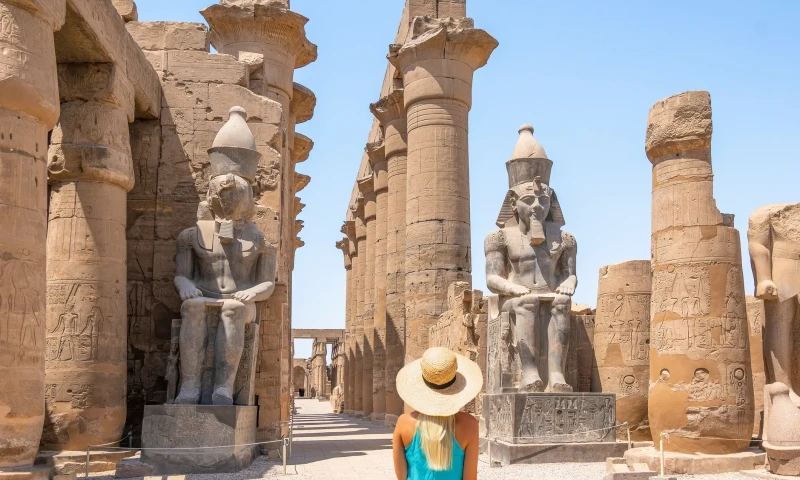
The East Bank is the most convenient place to begin understanding ancient Thebes. Karnak and Luxor temples stand relatively close to one another and together form two of the principal components of the UNESCO-listed archaeological landscape.
Karnak Temple Complex
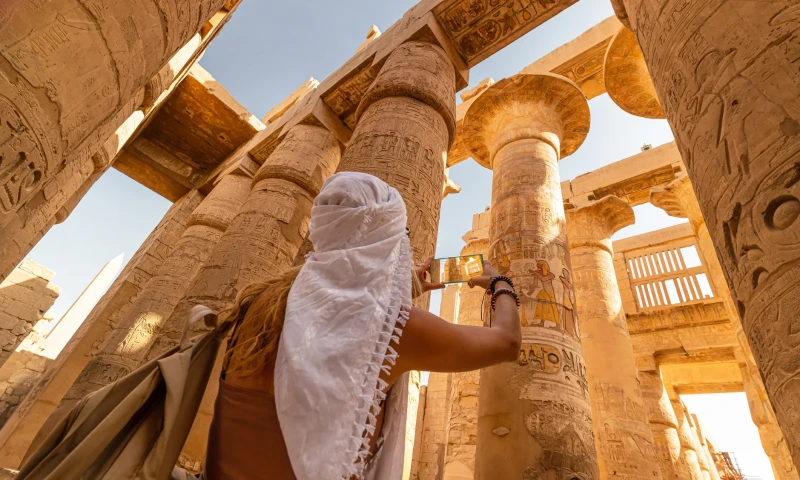
Karnak is not a single temple but an extensive complex containing temples, chapels, pylons, courtyards, and other structures. It occupied a central position in ancient Thebes and was closely associated with the worship of Amun.
Walking through Karnak reveals how different rulers added to the site over long periods rather than following one unified building program. Monumental gateways lead into large courts and columned spaces, while obelisks, reliefs, statues, and subsidiary sacred areas reveal successive phases of construction.
The Great Hypostyle Hall is one of the sections most visitors remember. Its forest of monumental columns gives a clear sense of the scale on which New Kingdom rulers worked at Karnak.
Luxor Temple
Luxor Temple stands closer to the modern center and the Nile. Together with Karnak, it formed part of the sacred landscape of ancient Thebes and remains one of the principal monuments included within the UNESCO World Heritage property.
Its pylons, columns, statues, reliefs, and surviving architectural additions record different periods of the site's use. Visiting both Luxor Temple and Karnak helps travelers understand that the ancient city was built around interconnected religious spaces rather than isolated monuments.
Luxor Museum
Luxor Museum overlooks the Nile on the East Bank and presents archaeological objects associated with Luxor and different periods of Egyptian history. Its collection includes statues of pharaohs and deities as well as other artifacts from the region.
A museum visit works particularly well alongside the archaeological sites. Seeing individual objects in a carefully presented collection can clarify details that are harder to notice among the monumental scale of the temples and tombs.
What to See on Luxor's West Bank
Crossing the Nile changes the character of a visit. The West Bank contains the great necropolises and funerary monuments of ancient Thebes, including sites associated with kings, queens, royal workers, and major New Kingdom rulers.
Valley of the Kings
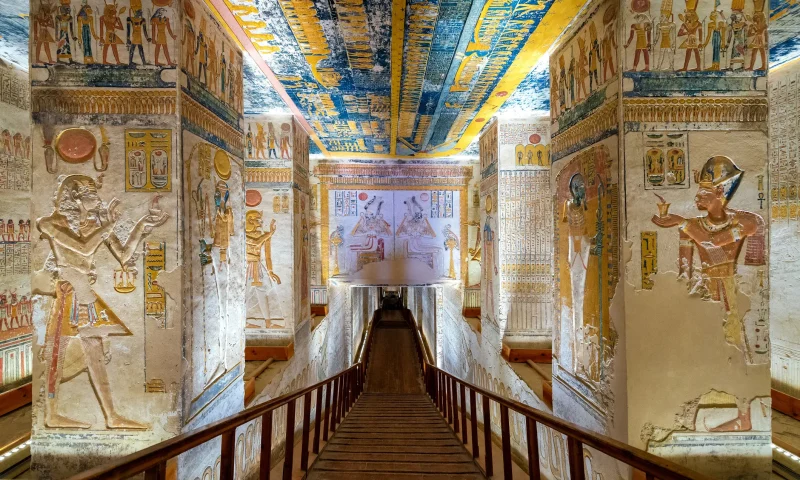
The Valley of the Kings served as a royal burial area during the New Kingdom. Tombs were cut into the surrounding cliffs, creating decorated underground spaces intended for the burials of Egyptian rulers.
Tutankhamun is among the rulers buried here, but the valley contains many royal tombs from different reigns. Their plans and decoration vary, giving visitors an opportunity to see how royal funerary traditions developed over time.
Rather than trying to view every available tomb, it can be more rewarding to spend time examining the paintings, inscriptions, corridors, burial chambers, and differences in layout within the tombs included in your visit.
Temple of Hatshepsut
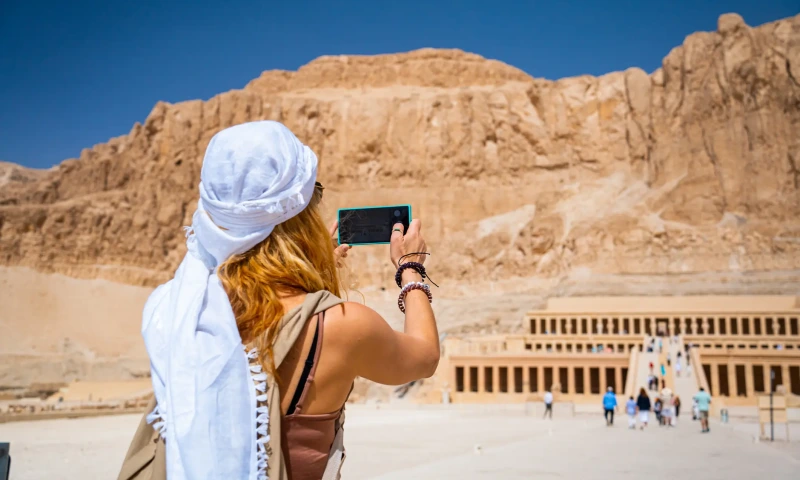
At Deir el-Bahari, the Temple of Hatshepsut rises against the cliffs of the West Bank. Hatshepsut, the queen who ruled as pharaoh, commissioned the temple, which was designed by Senenmut and was known in antiquity as Djeser-djeseru.
The structure differs visually from many other temples around Luxor. Terraces and colonnades extend toward the limestone cliffs, making the architecture closely connected with its desert setting.
Colossi of Memnon and Other West Bank Sites
The Colossi of Memnon are two monumental statues associated with the mortuary temple of Amenhotep III. They are among several major remains spread across the West Bank archaeological landscape. UNESCO's broader listing also includes sites such as the Ramesseum, Medinet Habu, the Valley of the Queens, and Deir el-Medina.
Travelers with more than one day for the West Bank can look beyond the best-known royal sites. Deir el-Medina, for example, is connected with the community of workers involved in creating royal tombs, adding another perspective to the history of ancient Thebes.
Planning a Visit to Luxor
One of the most useful facts about Luxor is that its principal archaeological attractions fall naturally into East Bank and West Bank groups. Organizing sightseeing this way usually creates a clearer itinerary than moving repeatedly across the Nile.
A first visit might devote one period to Karnak and Luxor Temple, then reserve a separate outing for the Valley of the Kings, Hatshepsut's temple, and other West Bank monuments. Travelers with additional time can add Luxor Museum, the Valley of the Queens, Medinet Habu, Deir el-Medina, or the Ramesseum according to their interests.
Comfortable walking shoes are practical because temple complexes and archaeological areas involve considerable movement over stone and uneven ground. Light, modest clothing works well for sightseeing, along with sun protection and drinking water.
Opening arrangements, accessible tombs, photography rules, and ticket combinations can change, so checking official visitor information shortly before visiting is sensible. This is particularly relevant in the Valley of the Kings, where access arrangements may vary between individual tombs.
Luxor also fits naturally into longer Egypt itineraries. Official Egyptian tourism information notes that Nile cruises commonly operate between Luxor and Aswan, allowing travelers to combine the monuments around Luxor city Egypt with archaeological sites farther south along the Nile.
FAQs
What is Luxor city Egypt known for?
Luxor city Egypt is known for the archaeological remains of ancient Thebes. Major sites include Karnak Temple, Luxor Temple, the Valley of the Kings, the Temple of Hatshepsut, and other monuments across the East and West Banks.
What are some important facts about Luxor for first-time visitors?
Useful facts about Luxor include its division into East Bank and West Bank sightseeing areas and its location within the archaeological landscape of ancient Thebes. Planning visits by bank makes it easier to organize temples, tombs, museums, and transfers.
What is the difference between Luxor's East Bank and West Bank?
The East Bank contains Karnak Temple, Luxor Temple, the modern city center, and Luxor Museum. The West Bank contains the principal necropolises and funerary monuments, including the Valley of the Kings, Valley of the Queens, and Temple of Hatshepsut.
Is Luxor the same place as ancient Thebes?
Modern Luxor occupies part of the area associated with ancient Thebes. The UNESCO World Heritage property known as Ancient Thebes with its Necropolis encompasses major monuments on both banks of the Nile around modern Luxor.
Can you take a Nile cruise from Luxor?
Yes. Nile cruises commonly operate between Luxor and Aswan, with stops at archaeological sites along the river depending on the cruise itinerary.
