


Introduction
Few archaeological sites define ancient Egypt as clearly as the great pyramids of Giza. Built on the Giza Plateau during Egypt’s 4th Dynasty, the three principal pyramids served as royal tombs for Khufu, Khafre and Menkaure. Khufu’s Great Pyramid is the oldest and largest of the three and remains the only surviving Wonder of the Ancient World.
Yet the plateau is much more than three monumental structures. Each pyramid belonged to a larger funerary complex containing temples, causeways and associated monuments, while the wider landscape includes queens’ pyramids, mastaba tombs and boat burials. The Great Sphinx adds another defining element to a site that forms part of the UNESCO World Heritage property of Memphis and its Necropolis – the Pyramid Fields from Giza to Dahshur.
Table of content:
What Are the Most Important Pyramids of Giza Facts?
Understanding a few pyramids of Giza facts helps put the scale of the plateau into context. The three principal pyramids were constructed for successive rulers of the 4th Dynasty: Khufu, Khafre and Menkaure. They were not isolated monuments but central elements within carefully planned royal funerary complexes.
Among them, the Great Pyramid stands apart. Built for Khufu, who reigned around 2589–2566 BC, it originally rose to 146.5 metres. According to Egypt’s Ministry of Tourism and Antiquities, it remained the world’s tallest structure for approximately 3,800 years.
UNESCO inscribed Memphis and its Necropolis, including the pyramid fields from Giza to Dahshur, on the World Heritage List in 1979. The wider property traces the development of Egyptian royal tomb architecture from mastabas through successive pyramid forms and includes Giza, Saqqara and Dahshur.
What Can You See at the Great Pyramids of Giza?
A visit to the great pyramids of Giza makes more sense when the plateau is viewed as an archaeological landscape rather than a group of separate monuments. The pyramids dominate the skyline, but the surrounding temples, tombs and associated structures reveal how each royal complex functioned.
The Great Pyramid of Khufu
Khufu’s pyramid is the oldest and largest of Giza’s three main pyramids. Its core was constructed from local limestone, while fine limestone from Turah once covered its exterior. Much of that outer casing has disappeared, exposing the stepped courses of the structure seen today.
The internal layout is equally important. Three chambers are known inside and beneath the monument: one cut into the bedrock and two positioned higher within the masonry. The King’s Chamber contains a stone sarcophagus and is reached through the Grand Gallery, a high corbelled passage that remains one of the pyramid’s most distinctive internal architectural features.
Boat pits also formed part of Khufu’s complex. Two large dismantled ships were found in pits on the pyramid’s southern side, evidence of the wider funerary arrangements associated with the king.
The Pyramid of Khafre
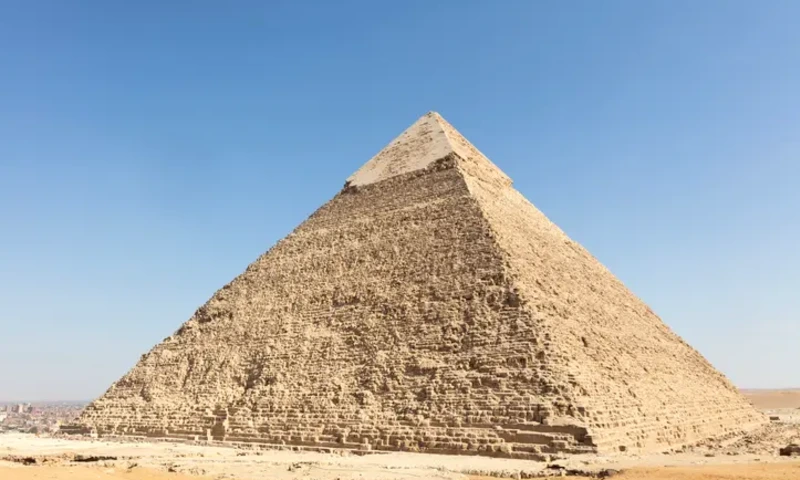
Khafre, Khufu’s son, built the second of the three principal pyramids. Seen from some viewpoints, his pyramid can appear taller because it stands on higher ground, though Khufu’s Great Pyramid was originally the larger structure.
Like the other royal monuments, Khafre’s pyramid formed part of a broader funerary complex rather than standing alone. Looking at the surrounding architecture helps explain how pyramids, temples and ceremonial routes worked together within the royal necropolis.
The Pyramid of Menkaure
Menkaure’s pyramid is the smallest of Giza’s three main pyramids, with an original height of about 65 metres. Its construction also differs in an important detail: granite quarried at Aswan was used for the lower portion of its exterior casing, while limestone was used above.
Menkaure was most likely Khafre’s son and Khufu’s grandson, placing the three principal monuments within successive generations of the royal family. The change in scale makes the pyramid particularly useful for understanding that Giza developed over time rather than as a single construction project.
The Great Sphinx and the Wider Plateau
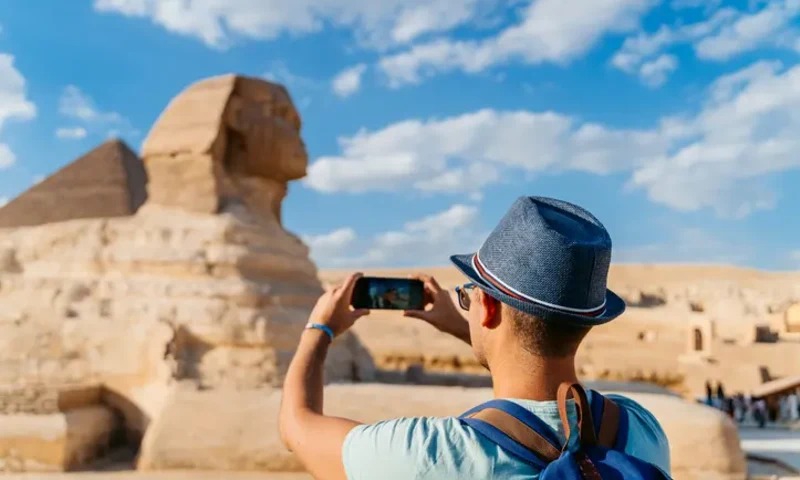
The Great Sphinx forms part of the wider archaeological landscape of Giza, alongside royal pyramids, smaller subsidiary pyramids, mastaba tombs, temples, causeways and boat burials. These surrounding remains are essential to understanding the plateau as a royal necropolis rather than simply the setting for three enormous tombs.
The Giza monuments also belong to a much larger ancient funerary landscape extending through sites including Saqqara and Dahshur. For travelers spending more time around Cairo, placing Giza within this broader setting gives useful context to the development of pyramid architecture in ancient Egypt.
How Were the Pyramids of Giza Built?
Construction methods remain one of the most discussed subjects surrounding the great pyramids of Giza. What can be stated confidently is that the monuments required large-scale organization, skilled labor, quarrying, transportation and highly accurate construction. The complete sequence of methods used to raise the Great Pyramid has not been established with certainty.
The surviving masonry also reveals careful choices of material. Khufu’s pyramid used local limestone for its main structure and finer Turah limestone for its original casing. Menkaure’s builders incorporated granite transported from Aswan into the lower section of the pyramid’s exterior, showing the logistical reach behind royal building projects of the period.
This uncertainty is part of what makes the site so valuable archaeologically. Research continues to refine our understanding of construction techniques, labor organization and the wider communities connected with the pyramid complexes.
How Should You Plan a Visit to the Giza Plateau?
Allow enough time to see more than the three pyramid exteriors. Distances across the plateau and the number of monuments make a planned route useful, particularly if you want to examine the individual pyramid complexes and the Great Sphinx rather than viewing them only from panoramic points.
Access arrangements for particular monuments can differ from general entry to the archaeological area, so check current official visitor information before your visit. This is especially relevant if entering the Great Pyramid is part of your plans.
Comfortable walking shoes are useful on the plateau’s uneven archaeological terrain. Sun protection and water are also sensible for an outdoor visit, while clothing that allows easy movement makes exploring the site more comfortable.
For a broader understanding of the capital and its archaeological surroundings, pair Giza with an OFT Travel Cairo city guide. Travelers building a longer itinerary can also compare Egypt travel packages that connect Cairo with destinations such as Luxor and Aswan.
FAQs
What are the three main pyramids at Giza?
The three principal pyramids were built for the 4th-Dynasty kings Khufu, Khafre and Menkaure. Khufu’s Great Pyramid is the oldest and largest of the three.
Why are the great pyramids of Giza important?
The great pyramids of Giza represent some of the most significant surviving monuments of ancient Egyptian royal architecture. Khufu’s Great Pyramid is also the only surviving member of the Seven Wonders of the Ancient World.
How tall was the Great Pyramid of Giza originally?
The Great Pyramid originally stood 146.5 metres high. It remained the tallest structure in the world for around 3,800 years.
What are useful pyramids of Giza facts to know before visiting?
Useful pyramids of Giza facts include that the three main pyramids belonged to larger funerary complexes and were built for Khufu, Khafre and Menkaure. The plateau also contains temples, smaller pyramids, mastaba tombs, boat burials and the Great Sphinx.
Is the Giza Plateau a UNESCO World Heritage Site?
Giza forms part of the UNESCO World Heritage property “Memphis and its Necropolis – the Pyramid Fields from Giza to Dahshur,” inscribed in 1979. The protected archaeological landscape includes pyramid fields extending beyond Giza to other major sites such as Saqqara and Dahshur.
