


Introduction
Aswan city Egypt lies on the Nile in southern Egypt, close to the First Cataract and the historic frontier between ancient Egypt and Nubia. The city has long been connected with trade, quarrying, river travel, and movement between Egypt and regions farther south. Egypt's Ministry of Tourism and Antiquities describes Aswan as an important southern gateway that linked Egypt with Africa through the Nile.
For travelers, Aswan feels different from Egypt's larger northern cities. Archaeological sites sit on islands or beside the river, traditional feluccas cross between the banks, and Nubian history forms an essential part of the city's identity. Major places include Philae, Elephantine Island, the Unfinished Obelisk, the Nubian Museum, the High Dam, and several monuments across the surrounding region.
Anyone researching about Aswan before traveling should also understand the role of the wider governorate. Important monuments extend north and south of the city, while Abu Simbel lies much farther south near Lake Nasser. Aswan itself is also a major point for Nile cruises operating through Upper Egypt.
Table of content:
Highlights of Aswan City Egypt
-
Travel by boat to the temples of Philae on Agilkia Island.
-
Visit Elephantine Island and see remains linked with ancient Aswan.
-
Examine the Unfinished Obelisk in Aswan's ancient granite quarries.
-
Explore Nubian history and culture at the Nubian Museum.
-
See the Nile from a traditional felucca.
-
Visit Nubian communities around Aswan.
-
See the Aswan High Dam and Lake Nasser area.
-
Use Aswan as a base for excursions to monuments farther south, including Abu Simbel.

What to Know About Aswan and Its History
One of the most important facts about Aswan is its geographical position. Ancient Egyptians knew the settlement as Swenet or Swnw, and the location served as a strategic southern gateway. Traders and travelers moving north from Nubia passed through the area, making it an important connection between Egypt and Africa.
The city's granite resources were equally important. Aswan's quarries supplied hard stone used in monumental building projects elsewhere in ancient Egypt, including statues and obelisks. The surviving quarry landscape still provides direct evidence of the techniques used to extract and shape enormous blocks.
Nubian history is another essential part of the region. UNESCO's Nubian Monuments from Abu Simbel to Philae World Heritage property includes ten components in Aswan Governorate, ranging from Abu Simbel and Philae to Elephantine, ancient quarries, tombs, and the Monastery of St Simeon. The international campaign to safeguard these monuments ran from 1960 to 1980 in response to changes associated with the construction of the High Dam.
Modern Aswan therefore combines several historical layers rather than representing one period alone. Ancient Egyptian, Nubian, Ptolemaic, Roman, Coptic, Islamic, and modern histories can all be encountered within the city and surrounding region.
Major Archaeological Sites in Aswan City Egypt
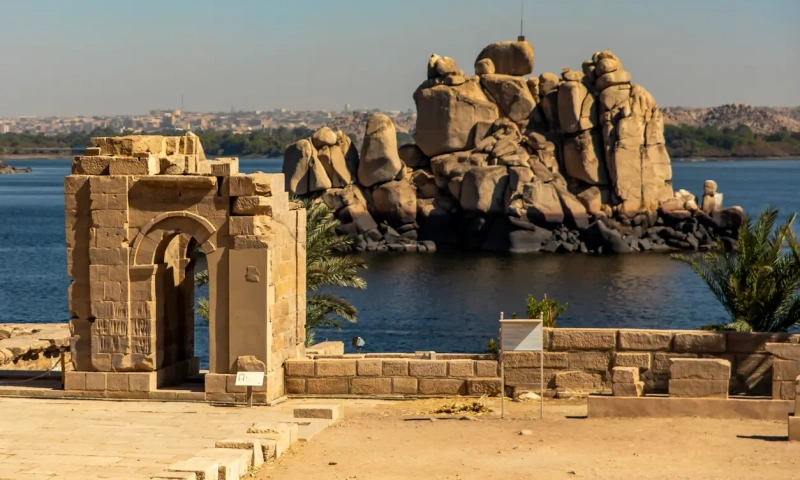
Many archaeological visits around Aswan city Egypt depend on the Nile. Some sites sit on islands and require boat access, making the river part of the sightseeing experience rather than simply a backdrop.
Philae Temple
Philae is one of Aswan's principal archaeological sites. The surviving complex includes buildings dating mainly from the Ptolemaic and Roman periods, with the Temple of Isis forming its central monument. The sanctuary was closely associated with Isis, Osiris, and Horus and remained an important religious center for centuries.
The temples visitors see today stand on Agilkia Island. During the international campaign to protect Nubian monuments, structures from the original Philae Island were dismantled and reconstructed on nearby higher ground as rising water threatened the original location. UNESCO includes Philae within its World Heritage property of Nubian monuments extending from Aswan toward Abu Simbel.
Reaching Philae by boat gives the visit a distinctive rhythm. Instead of arriving directly by road, travelers cross the Nile before walking among pylons, courtyards, columns, reliefs, and smaller structures such as Trajan's Kiosk.
Elephantine Island
Elephantine Island occupies a significant position in the Nile at Aswan. Archaeological remains include ancient settlement areas and structures connected with the temples of Khnum and Satet, while a Nilometer reflects the importance of observing Nile levels in antiquity.
The island's position made it important for administration, trade, and frontier control. UNESCO includes the ruins of ancient Elephantine among the components of the Nubian Monuments World Heritage property.
A visit here provides a more layered view of ancient Aswan than a single monumental temple. Domestic remains, sacred structures, archaeological excavations, and the surrounding river help explain how the settlement functioned over long periods.
The Unfinished Obelisk
The Unfinished Obelisk remains in one of Aswan's ancient granite quarries. Archaeologists believe it was commissioned during the reign of Hatshepsut, but work stopped after flaws and fissures appeared in the stone. If completed, it would have stood around 42 meters high and weighed more than a thousand tonnes.
Its importance lies partly in what was never finished. Tool marks and the partially separated stone give visitors a direct look at how ancient quarry workers approached monuments of enormous scale.
The quarry also connects Aswan to temples far beyond the city. Granite extracted in this region was transported north for major construction projects, making Aswan an important source of material for ancient Egyptian monumental architecture.
Nubian Culture, Museums and the Nile
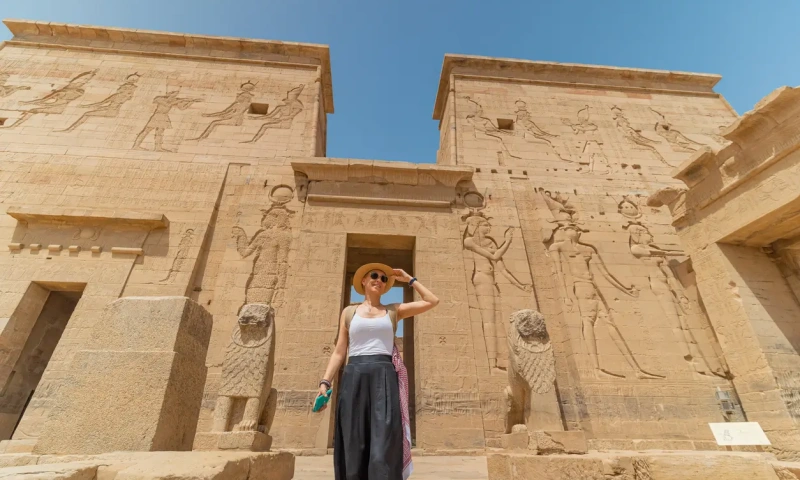
Archaeology explains only part of Aswan. Nubian identity remains central to understanding the region, and the city's museums and communities provide context for traditions shaped by the Nile Valley south of Egypt.
Nubian Museum
The Nubian Museum was developed following the international campaign to preserve the heritage of Nubia. It opened in 1997 and presents archaeological, historical, cultural, and environmental material connected with Nubian civilization.
Its collection spans long periods of history and helps explain the relationship between Nubia and Egypt. For travelers heading to Philae, Abu Simbel, or other monuments in the south, visiting the museum can make later archaeological sites easier to understand.
The building itself was designed to reflect local Nubian architectural traditions, using sandstone and pink granite connected with the surrounding landscape.
Aswan Museum
The Aswan Museum occupies a former villa on Elephantine Island. It was adapted to display archaeological material found during work connected with the old Aswan Dam and excavations on Elephantine.
Its setting makes it particularly relevant when exploring the island, as the collection can be viewed alongside the archaeological landscape from which many objects originated.
Feluccas and the Nile
The Nile remains central to everyday movement and tourism in Aswan. Traditional feluccas sail between the islands and riverbanks, offering a slower way to see the surrounding landscape.
Boat travel also forms a practical part of sightseeing. Philae requires boat access, while Elephantine and other islands are naturally reached from the river. Egypt's official tourism material consistently presents the Nile as one of the defining elements of an Aswan visit.
Nubian villages around the area can also form part of a visit, depending on the itinerary chosen. Travelers should check exactly what a village excursion includes rather than assuming all experiences follow the same program.
Planning Your Time in Aswan
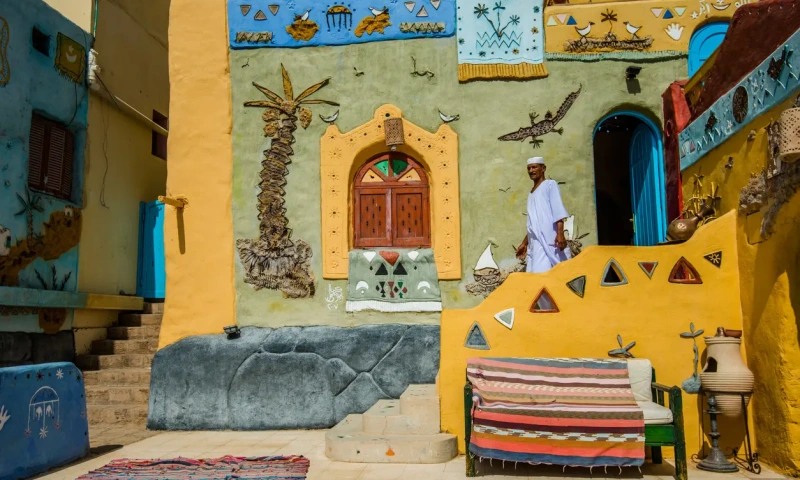
Because the main attractions are spread between the city, river islands, and surrounding desert areas, it helps to organize aswan city egypt geographically. Philae, Elephantine, the Nubian Museum, the Unfinished Obelisk, and the High Dam do not all occupy the same part of the city.
Boat-based attractions also require slightly different planning from road-accessible sites. When reserving an excursion, review transport arrangements, departure points, boat transfers, entrance details, and any services listed as included or excluded.
Comfortable footwear is useful at archaeological sites, particularly around stone surfaces and quarry areas. Lightweight, respectful clothing and sun protection are practical for outdoor sightseeing, while individual religious or cultural sites may have their own visitor requirements.
Aswan is also strongly connected with Nile cruise itineraries. Many cruises operate between Luxor and Aswan, often including stops at temples along the river. The city may therefore function as the beginning or end of a cruise rather than a standalone destination.
Travelers with additional time can look farther south. Abu Simbel lies roughly 300 kilometers south of Aswan, according to Egypt's Ministry of Tourism and Antiquities, and is normally treated as a separate excursion rather than part of central-city sightseeing.

FAQs
What is Aswan city Egypt known for?
Aswan city Egypt is known for its Nile setting, Nubian heritage, Philae Temple, Elephantine Island, ancient granite quarries, the Unfinished Obelisk, and the Nubian Museum. It is also an important starting or ending point for many Nile cruise itineraries.
What should first-time travelers know about Aswan?
One useful point about Aswan is that its attractions are spread across islands, riverbanks, and areas outside the central city. Planning transport and boat transfers in advance can make it easier to organize Philae, Elephantine, museums, and other sites.
Why is Philae Temple on Agilkia Island?
The Philae monuments were relocated from their original island during the international effort to preserve Nubian sites affected by changes in Nile water levels following the High Dam project. They were reconstructed on nearby Agilkia Island.
What is special about the Unfinished Obelisk?
The Unfinished Obelisk remains partly attached to the granite bedrock where ancient workers began shaping it. Its unfinished state preserves evidence of ancient quarrying methods and shows the enormous scale of obelisk production.
Can Aswan be combined with a Nile cruise?
Yes. Aswan commonly serves as one endpoint for Nile cruises through Upper Egypt, often connecting with Luxor and river sites between the two cities. Travelers should check the exact cruise route and schedule before booking.
