


Introduction
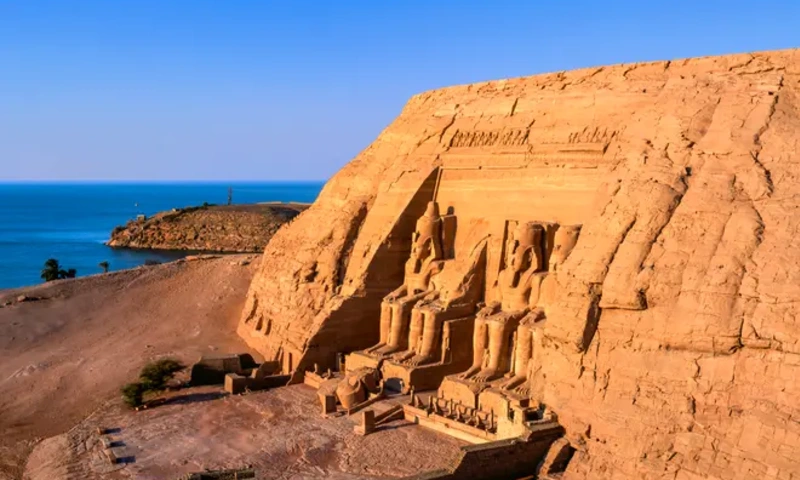
The Abu Simbel temples stand on the western shore of Lake Nasser in southern Egypt, around 290 km south of Aswan. Carved into the rock during the reign of Ramesses II, the complex consists of two temples: the Great Temple associated with the king and the smaller temple dedicated to the goddess Hathor and Queen Nefertari.
Their story extends far beyond ancient Egypt. When construction of the Aswan High Dam threatened Nubian monuments with rising water, an international UNESCO-led campaign helped save Abu Simbel. The temples were dismantled and reconstructed on higher ground, and today they form part of the UNESCO World Heritage property Nubian Monuments from Abu Simbel to Philae.
For travelers staying in Aswan, Abu Simbel adds an important chapter to a broader exploration of Nubia and southern Egypt. Its architecture, royal imagery and modern relocation make the site as significant for the history of archaeological conservation as it is for understanding the reign of Ramesses II.
Table of content:
What Does Abu Simbel History Tell Us About the Temples?
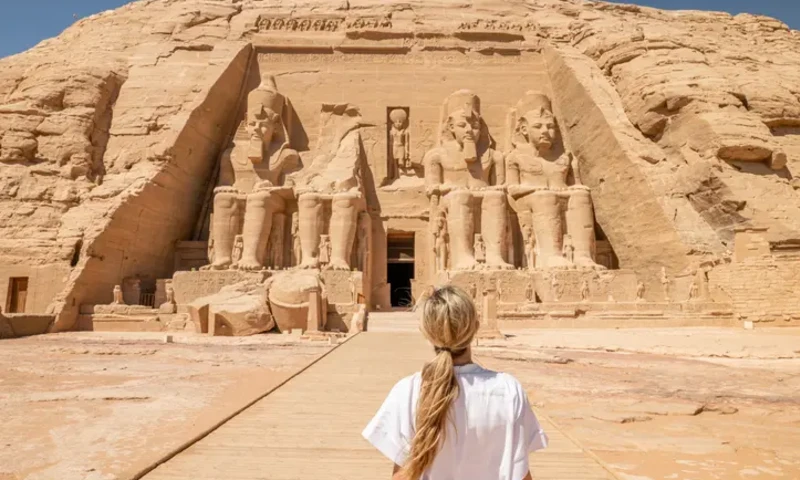
The Abu Simbel history begins with Ramesses II, one of the major rulers of Egypt's 19th Dynasty. The Great Temple was cut directly into the rock around 1264 BC, during his reign, and its façade is dominated by four colossal seated representations of the king. One of the statues collapsed following an ancient earthquake, and parts of it remain at the base of the façade.
The complex stood in ancient Nubia, close to Egypt's southern frontier. Rather than functioning as a single monument, Abu Simbel consists of two separate rock-cut temples with distinct dedications and architectural programs.
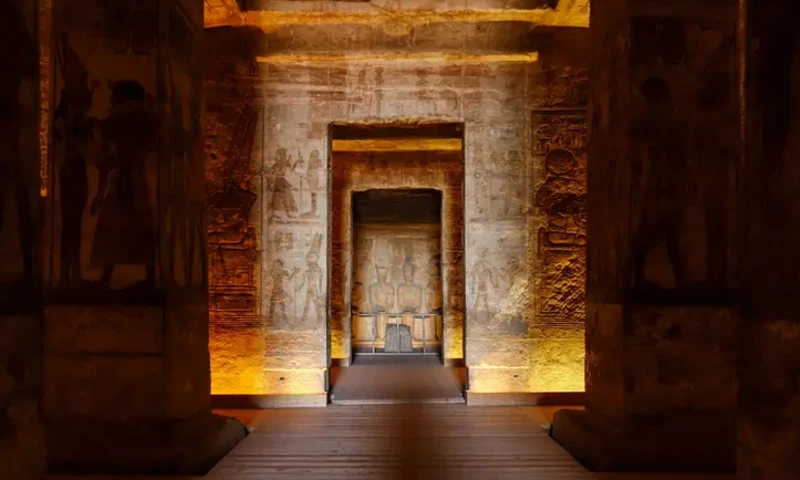
The Great Temple was dedicated to Amun-Ra, Ra-Horakhty, Ptah and the deified Ramesses II. Inside, monumental standing figures of the king line the main hall, creating a processional route toward the sanctuary. There, seated figures represent the three gods and Ramesses II in divine form.
A short distance away, the Small Temple was created in honor of Queen Nefertari and Hathor. Its façade is particularly notable because the colossal figures of Nefertari appear at the same scale as those of Ramesses II, a rare treatment in Egyptian royal representation.
What Can You See at the Abu Simbel Temples?
The two Abu Simbel temples are closely related, yet each has its own architectural identity. Looking at them together reveals how Ramesses II used monumental sculpture, religious imagery and rock-cut architecture for both royal and divine representation.
The Great Temple of Ramesses II
The Great Temple is immediately recognizable by the four seated colossi carved into its façade. These monumental representations of Ramesses II establish the royal character of the building before visitors enter its interior.
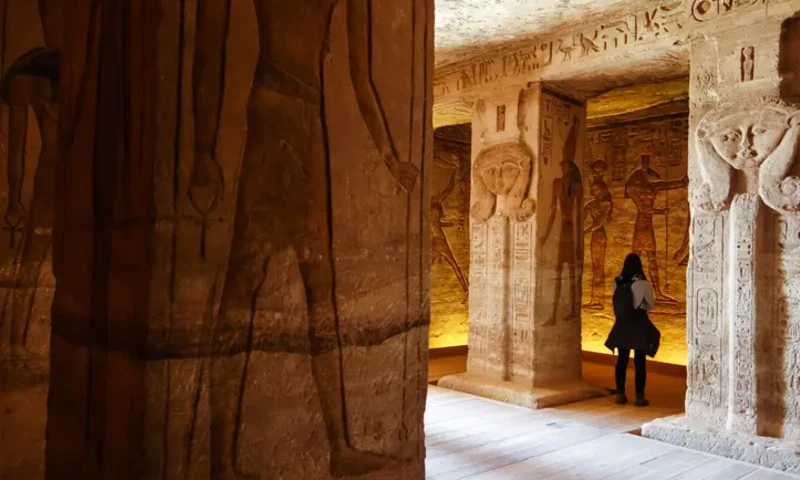
Inside, large standing statues of the king line the principal hall. The route continues through a sequence of interior spaces toward the sanctuary, where figures of Amun-Ra, Ra-Horakhty, Ptah and the deified Ramesses II sit at the deepest point of the temple.
The relationship between architecture, sculpture and royal imagery continues throughout the building. Rather than treating the façade as the only point of interest, allow time to look at how the interior becomes progressively more enclosed as it approaches the sanctuary.
The Small Temple of Nefertari
North of the Great Temple stands the second rock-cut monument, commonly called the Small Temple. Ramesses II dedicated it to Hathor and his Great Royal Wife, Queen Nefertari.
Its façade presents colossal figures of the king and queen. Nefertari's statues are the same size as those of Ramesses II, which Egypt's Ministry of Tourism and Antiquities identifies as a very rare example of this type of representation.
The temple gives Nefertari an architectural presence unusual enough to deserve attention in its own right rather than viewing the building simply as an addition to the larger monument next door.
The Solar Alignment
One of Abu Simbel's most discussed architectural features occurs inside the Great Temple. On February 22 and October 22, sunlight enters the temple and travels through its interior to illuminate figures in the sanctuary.
According to Egypt's Ministry of Tourism and Antiquities, the rays illuminate Amun-Ra, the deified Ramesses II and Ra-Horakhty. Ptah remains outside the direct illumination.
The phenomenon makes the relationship between the temple's orientation and its sanctuary particularly interesting. Travelers visiting on other dates can still understand the alignment by following the temple's axis from the entrance toward the innermost chamber.
How Were the Abu Simbel Temples Moved?
The modern chapter of the Abu Simbel temples is one of the defining episodes in international heritage conservation. The decision to construct the Aswan High Dam meant that a large area of Nubia would be affected by the waters of the reservoir created behind it.
Egypt and Sudan requested UNESCO's assistance in 1959. The following year, UNESCO launched an international campaign to protect the archaeological heritage threatened by the project. The effort involved recording and excavating numerous sites as well as relocating several important temples to higher ground.
Abu Simbel became the campaign's best-known rescue project. The temples were carefully dismantled and reconstructed at a higher location, with their relocation completed in 1968. Although they no longer occupy their original physical position, UNESCO notes that the care taken during dismantling and reconstruction preserved their form, design and a high degree of authenticity.
The international campaign extended well beyond Abu Simbel. Other Nubian monuments were also relocated, including Philae, which travelers can visit while staying in Aswan. UNESCO's Nubian Monuments from Abu Simbel to Philae property now consists of ten component parts representing a long sequence of Egyptian history.
The property was inscribed on the UNESCO World Heritage List in 1979. This modern conservation story is now inseparable from Abu Simbel history, adding a 20th-century chapter to monuments originally created more than three millennia earlier.
How Should You Plan a Visit to Abu Simbel?
Abu Simbel's location should be considered when organizing an Upper Egypt itinerary. The archaeological site lies on the western bank of Lake Nasser, around 290 km south of Aswan, making Aswan the natural base for many travelers planning a visit.
Before traveling, check current visitor arrangements with Egypt's Ministry of Tourism and Antiquities, as operational details can change. Travelers interested in the solar alignment should pay particular attention to February 22 and October 22, the dates associated with sunlight reaching the sanctuary.
Abu Simbel also fits naturally into a wider southern Egypt itinerary. An Aswan travel guide can help place the temples alongside Philae, Elephantine Island and the region's Nubian heritage, while travelers continuing north can compare Nile cruise routes between Aswan and Luxor.
For a broader view of the country, combining southern Egypt with Cairo provides context for very different periods of Egyptian history. OFT Travel's Egypt travel packages can also help travelers compare itineraries that connect Cairo, the Nile Valley and Upper Egypt.
FAQs
Who built the Abu Simbel temples?
The Abu Simbel temples were built during the reign of Ramesses II of Egypt's 19th Dynasty. The Great Temple was associated with Ramesses II and several deities, while the Small Temple honored Hathor and Queen Nefertari.
Why were the Abu Simbel temples moved?
The temples were threatened by rising waters associated with the construction of the Aswan High Dam. An international UNESCO-led campaign helped relocate them to higher ground, with the move completed in 1968.
What is important to know about Abu Simbel history?
A central part of Abu Simbel history is its connection to Ramesses II and ancient Nubia, followed centuries later by the international campaign that saved the temples. The site now forms part of the UNESCO World Heritage property Nubian Monuments from Abu Simbel to Philae.
What happens during the Abu Simbel solar alignment?
On February 22 and October 22, sunlight travels into the Great Temple and reaches the sanctuary. It illuminates the figures of Amun-Ra, Ramesses II and Ra-Horakhty, while Ptah remains outside the direct rays.
Where are the Abu Simbel temples?
Abu Simbel is in southern Egypt on the western bank of Lake Nasser, around 290 km south of Aswan. The complex consists of the Great Temple of Ramesses II and the smaller temple dedicated to Hathor and Queen Nefertari.
